

shouting to the 24-year-old sapper, "Kol
hakovod, Kol hakovod," Hebrew for "All
glory to you." As usual, Yoni pretends not
to hear. He was only doing his job — a job
that he and several dozen other sappers
anonymously perform about 100 times
each week — sometimes as often as 30
times a day.
This is Jerusalem, where bomb threats
are as common as paper bags and forgot-
ten briefcases. Only one percent of them
are "real bombs" and a mere fraction of
these ever detonate. It's the Bomb Squad's
mission to ensure that the city of Jeru-
salem is not paralyzed and its citizens are
not afraid to venture out. As such, the sap-
pers know their very lives are the first line
of defense.
•
Jewish Jerusalem has always lived with
the threat of bombs. In pre-Israel
Palestine, such Jewish para-military
groups as the Haganah handled bomb
disposal. After statehood in 1948, the
Israel Defense Forces assumed this respon-
sibility. In the early 1970s, as Jerusalem
was coming under more civilian control,
the police took over the task, hiring ex-
army sappers.
Thn years ago, with the upsurge in ter-
rorism, autonomous sapper units were
developed throughout the country. There
isn't a town in Israel without a resident
Bomb Squad. The largest and most active
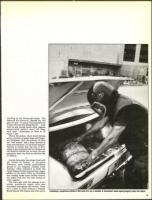
Examining a suspicious cylinder in the trunk of a car, a member of Jerusalem's bomb squad gingerly moves the object.
47