

. ,
•
Ie
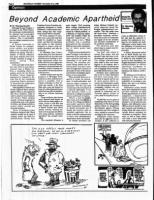
THE u . .s. . 1\1£'£1) � /tI1�il.£ /V14P£V
Fo D F€NS£� S,D wE AS AM£R/G AlS
C fttI I<�E P o t-II"'" 5rANOA�i)
Or LtV',.., !
awe an affirmative ction of
fice 0 d the uthority to
monitor t e emp oyment sear
ch fo n f culty and staff.
Affirmative ction begins with
the definition of departmental
and in titu ional needs and
priorities.
A history department hich
no Bla faculty and also
no 0 e must be challenged
to define i next available joh
. search in these disciplines. An
English department . ch lacks
scholar/te chers in African
American, Car ibbe n or
African literature seriously
dicap tudents intellec-
tually.
By defining a new faculty ap
pointment in these areas, a
dep rtment c n increase the
probabdty of recruiting a can
didate who also is an African
American scholar.
Affirm tive action should
mean that administrators must
u e their authority to Mock
faculty ppointments, if in their
judgement, a department's
search committee did not take
exte . ve teps to identify and
attemp to recruit minority can
didates. And affirmative ction
officer must be funded to sup
port research and teaching ac
tivities which will create a more
raci Uy diverse cademic en
vironment on campuses. These
steps, well many other ,
can create a more democratic
d 0 racist education.