

22 | NOVEMBER 23 • 2023
J
N
L
ately, different cities around the
world have been setting up tables
with empty place settings and
empty chairs in honor of the 242 hostages
kidnapped by Hamas during the terror
attacks on Oct. 7 in Israel. Sometimes
each of the empty chairs has a picture of a
hostage taped to it.
One woman, a relative of seven of the
hostages, tearfully rearranged some of the
empty chairs of the display in Chicago so
her loved ones in captivity were “seated”
next to each other.
At that moment, Rachel Volkowitz
passed by and the two struck up a
conversation. Volkowitz hugged the
woman and shared that her brother had
created special dog tags in honor of the
hostages that are being worn by students
in several cities.
Then and there, Volkowitz FaceTimed
her brother, Avi Smith of Southfield, who
attends Shomrey Emunah and who is
also a father of a Lone Soldier currently
fighting on the front lines.
This Chicago woman was extremely
moved to meet Smith and hear about the
dog tags he’d created — each with just
one hostage’s name. Her beloved relatives
weren’t just a faceless, nameless number.
Each of them was being remembered and
prayed for individually.
The inspiration for these dog tags
came from the POW/MIA (Prisoner
of War/Missing in Action) bracelets
that were in circulation in the United
States during the Vietnam War. They’d
first been introduced by two college
students as a way to honor and increase
awareness of the missing American
soldiers. Traditionally, according to the
Smithsonian Institution, these bracelets
were worn until the POW returned to the
United States at which time the bracelet
was presented to the former prisoner.
“It occurred to me that we should
do something similar for the hostages
in Gaza,” said Smith, who is a software
developer. His hobby is playing around
with dye sublimination, using special
printers and a heat press. Immediately
after the war broke out, he started
creating these dog tags.
Smith found a list of the hostages and
printed each dog tag with a single name,
along with “Acheinu Kol Beit Yisrael,” a
prayer of solidarity with Israel. On the
Farber students and teachers are praying
for each hostage.
Dog Tag Project
Honors Hostages
ROCHEL BURSTYN CONTRIBUTING WRITER
OUR COMMUNITY
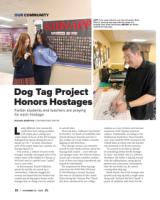
LEFT: Twin sisters Rachel and Yael Schreiber, Bnot
Sheirut, wearing dog tags with the name of a
hostage they know personally. BELOW: Avi Smith
making the dog tags.