

Food
Decorating, Cooking For Harvest Festival
Sukkot began as a pilgrimage holiday, a
time when our forbears traveled to
Jerusalem carrying figs, dates, pomegran-
New York
ates, apricots, squash, oil, barley, wheat,
bread and wine. After the year's final har-
aryl Ehrlich has vivid memories
vest, the Israelites offered thanks for the
of the sukkah built by an
blessing of fruit and grain and shared the
Orthodox rabbi in the Miami
earth's bounty with the poor.
Beach neighborhood where she
Since Sukkot marked the end of the
was a child. That grid of streets is still lush
growing season, thousands of people were
with green lawns in front of pastel houses;
able to spend a week celebrating and living
behind them are grass-covered alleys wider
in harvesters' huts, a precursor to the mod-
than trucks. Every Sukkot, the rabbi erect-
ern sukkah.
ed the ceremonial but in the alley behind
Although it takes more time and effort,
his house, diagonally across from the
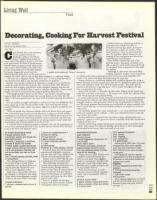
A sukkah with traditional "harves t" decorations.
hanging
a farmer's market worth of produce
Ehrlich family's back door. In the spirit of the
on sukkah walls and incorporating some of the fruits and vegetables into
holiday, the rabbi and his wife invited their neighbors to celebrate Sukkot.
recipes is far more rewarding than decorating the easy way.
"We were not a religious family," Ehrlich says. "I used to look forward to
Lemon chicken is a traditional Sukkot dish, probably because the etrog, a
this festivity every fall; it was my only connection to Judaism."
lemon
flavored, divinely scented citrus the size of a grapefruit, plays a pivotal
Ehrlich, who teaches a behavioral approach to weight loss in Manhattan,
role in the holiday's rituals. The Book of Leviticus says, "You shall take for
recalls the palm fronds that created a lacy ceiling and the rabbi filling his
yourselves the product of goodly trees," which rabbis throughout the ages
small but with oranges, grapefruits, limes, mangoes, papayas, lemons and
have interpreted as the etrog.
etrogs, the citrus-like fruit that is used to celebrate the holiday. Their varied
Along with the lulav — branches of palm trees, willows of the brook and
shapes and colors mesmerized her; tropical perfume filled the air.
leafy trees, assumed to be myrtle — the etrog is one of the four species of the
"The dangling decor wasn't just for show," says Ehrlich, describina large
earth which represent all growing things.
b the
baskets filled with Florida's finest fruit among dishes on the table that
In today's push-button world, many of us have lost the connection between
rabbi's wife had prepared from the same kind of produce gracing the sukkah's
farming
and the food on our table. Perhaps it's because we purchase shrink-
walls.
wrapped produce, order groceries online or rely on restaurants to deliver din-
Her description brought back Sukkot celebrations from my childhood. But
ner. We couch potatoes have become too comfortable to adorn a sukkah with
since I grew up in the suburbs of New York, I was smelling and tasting
food we cook and eat, to entertain friends outdoors, or simply to commune
entirely different crops: apples and pears, eggplants, peppers, pumpkins and
with nature.
parsnips.
For centuries, people have read, noshed and — on warm afternoons basked
There are people who decorate sukkah walls with plastic fruit and vegeta-
in filtered sunshine inside sukkahs — they have chatted for hours under the
bles, which they recycle and use year after year. A page in a Jewish holiday
stars within their walls.
cookbook I own features a photo touting "creative sukkah decoration in Los
Traditionally these makeshift huts have been a place of hospitality and
Angeles." Its walls are made from bamboo curtains stenciled with bananas,
openness, a place to invite guests for dinner, especially those who do not have
watermelons, oranges and strawberries; its ceiling supports super-sized card-
a sukkah of their own.
board pears and twirling mobiles of artificial fruit.
Weather permitting, people should enjoy as many meals as possible inside
In a world where computer programs compete with real life experiences, is
sukkah
walls during the eight-day holiday, all of which is more meaningful
virtual fruit becoming the link to our ancient harvest festival? How did Jews
surrounded by the touch, sight and smell of real food.
stray so far from our agrarian roots?
LINDA MOREL
Special to the Jewish News
C
AUTUMN VEGETABLE SOUP
3 quarts chicken broth
3 potatoes, peeled and diced into
bite-sized chunks
6 carrots, 2 parsnips, 2 zucchini,
cleaned & sliced into circles
6 celery stalks, peeled and sliced
2 large onions, skinned and diced
1/2 lb. string beans cleaned and
cut horizontally into two or three
pieces
1/2 t. minced parsley and dill, fresh
or dehydrated
Place all ingredients in a large pot.
Cover and bring to a boil. Lower
temperature to a medium flame, stir-
ring occasionally. Simmer for one
hour or until vegetables soften.
Ladle into a soup tureen and serve
immediately or refrigerate and reheat.
Tastes better when prepared a couple
of days in advance. Yield: 8 servings.
LEMON CHICKEN
1 chicken, cleaned and cut into 8
pieces
1 lemon for squeezing plus 2
lemons for slicing
1/2 cup olive oil
2 garlic cloves, minced
3 t. dried rosemary needles
1 t. salt
no-stick spray
Optional: 2 t. fresh parsley, minced
In a bowl, pour juice of one lemon
and olive oil. Add garlic, rosemary
and salt. Mix well. Coat chicken with
mixture and marinate for an hour.
Preheat oven to 450F. Heavily coat
a roasting pan with no-stick spray.
Slice remaining 2 lemons into
rounds (removing pits) and scatter on
bottom of pan. Arrange chicken
pieces on top. Place in oven and baste
every 10 minutes with pan liquids.
Roast for 45 minutes, or until chick-
en browns and juices run clear when
pierced with a fork.
Serve on a platter, surrounding
chicken with lemon rounds. Garnish
with parsley. Yield: 5-6 servings.
ROASTED EGGPLANT
AND TOMATO
No-stick spray
4 small eggplants, sliced into 1/4
inch circles
garlic salt to taste
8 medium tomatoes, sliced into
approximately 1/8 inch circles
3/4 cup seasoned bread crumbs
olive oil for drizzling
Preheat oven to 350F. Heavily coat
a shallow ovenproof roasting pan
with no-stick spray. Place eggplant
circles in roasting pan. Sprinkle with
garlic salt. Cover with tomato slices.
Sprinkle bread crumbs and garlic salt
on top. Drizzle with oil.
Roast for 45 minutes, or until
tomatoes shrivel and both vegetables
soften. Serve immediately. Yield: 8
servings.
PEAR & PLUM CRISP
4 pears, peeled, cored and sliced
5 plums, peeled, pitted and sliced
2 t. lemon juice
1/2 t. ground cinnamon
114 t. cloves
1/4 t. nutmeg
1/4 t. cardamom
1 T. white sugar
Preheat oven to 350F. Coat a 7x11-inch
ovenproof dish with no-stick vegetable
spray. Place pears and plums in a large
bowl. Add lemon juice, spices and sugar,
mixing gently.
Line baking dish with fruit. Sprinkle
topping (below) over fruit and bake for 35-
45 minutes, or until casserole bubbles and
topping turns crunchy.
Topping:
1/2 cup margarine at room tem-
perature
1 1/4 cup blanched almonds,
chopped
1 cup brown sugar
3/4 cup flour
Place topping ingredients in a bowl
and blend with a fork until mixture
becomes lumpy and pasty. Yield: 8
servings.
9/28
2001
85