
INSIDE:
Young Adult Focus:
Campaign 2000
110
food
health
the scene
sports
Making Strides
For Health
114
Rolling In
Dad's Footsteps
116
travel
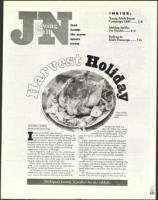
Roast chicken
with pears and
onions
ANNABEL COHEN
Special to the Jewish News
I
t seems everybody looks forward
to the holiday of Sukkot. After all, following the
somber and reflective holiday of Yom Kippur, the
sight of outdoor rooms cheerfully decorated with
hanging fruits and nuts, pictures, photos and leafy
branches marks the first happy holiday of the Jewish
new year and perhaps the last outdoor-entertaining
opportunity of the year in Michigan.
Fruits, vegetables, seeds and nuts that symbolize the
harvest are the foods of Sukkot. And as the temporary
structures begin to appear as additions to many Jewish
homes in the area, many people begin the ritual of bak-
ing and cooking for the meals served there.
These sukkot, the Hebrew word for "booths" or
"huts," were intended be lived in for the eight days of
the holiday (including Shemini Atzeret).
In Michigan, its not always pleasant to sleep in the
sukkah when the temperature dips. Consequently,
many observe the mitzvah of living in the sukkah by
eating every meal in it.
Many also follow the custom
of inviting ushpizin, special guests,
each day for the sukkah meals. The ush-
pizin are said to symbolize important people of the
Bible.
A great emphasis is placed on simplicity of prepara-
tion. And the most important element of what makes
Sukkot food meaningful are the harvest foods — espe-
cially those native to your own region. While harvest
foods differ in every country and region, in Michigan
hard fruits like apples and pears are right in season, as
are vegetables such as corn and squashes, including
pumpkin.
If these ingredients sound like the types of foods
usually served at the American holiday of Thanksgiving,
it's a happy coincidence. Sukkot is often referred to as
the holiday of "ingathering." Historically, ancient Jews
would pilgrimage to Jerusalem after the harvest to give
thanks.
The following recipes are perfect for the Feast of
Booths. They are easy to prepare so that you're able to
Michigan's bounty s perfect for the sukkah.
10/13
2000
107
Scanned image of the page. Keyboard directions: use + to zoom in, - to zoom out, arrow keys to pan inside the viewer.
October 13, 2000 - Image 107
- Resource type:
- Text
- Publication:
- The Detroit Jewish News, 2000-10-13
Disclaimer: Computer generated plain text may have errors. Read more about this.