
SIN Entertaihment
Get On The Bus'
it is the ride that
proves to be most
compelling, for this
ince the release of his first is not a grand,
film, She's Gotta Have It, Di- sweeping film about
rector Spike Lee has been "the march," but an
hailed as a genius (Do the intimate film about
Right Thing), vilified as a racist the marchers.
(Mo Better Blues, Malcolm X) and
Directing from a
criticized for making movies that screenplay by Reg-
are uneven, obvious or heavy- gie Rock Bythe-
handed (School Daze, Jungle wood, Lee has
Fever, Clockers).
assembled a diverse
In each of these films, Lee ex- collection of charac-
plored aspects of the black expe- ters from all walks
rience in America, with varying of life, including an
degrees of success. In his newest aging preacher
film, Get on the Bus, Lee seems man, an aspiring ac-
to have culled the finer ingredi- tor, a cop, an es-
ents of his previous films, and the tranged father and
result is a balanced, intelligent his teen-age son,
and entertaining cross-country and even two quar-
journey through black America. relling gay lovers.
Structurally, the film is built
While the types Spike Lee s Ge t on the Bus is about more than a march.
around a group of African-
may feel famil-
ens and engages, without the
American men who
iar, they are never stereo- browbeating that is typical of a
have chartered a bus
MOVIES
typical. Each character has Spike Lee venture. The cast is
headed from L.A. to the
something to say: about populated with both familiar and
Million Man March in
himself, his gender, his race and
Washington, D.C. Although their his country. The convergence of unfamiliar faces, including the
destination is important in itself, the many perspectives enlight- venerable Spike Lee veteran
Rated R
S
Ossie Davis and "Homicide's"
Richard Belzer and Andre
Braugher.
Spike Lee has alienated many
throughout his career, but this
new film is an invitation to all.
Whether you are getting on for
the first time or getting back on,
you don't want to miss this bus.
—Richard Halprin
'The Chamber'
PH010 BY FRANCOIS DU HAM EL
Rated R
Gene Hackman portrays
a white supremacist in
The Chamber.
ith the release of The
Chamber, one can only
hope that novelist John
Grisham does not be-
come as prolific as Stephen
King, because enough is enough
already. The formula is the
W
same in all of his stories: A
young, eager attorney battles
the shadowy forces of corruption
and conspiracy in pursuit of
some idyllic, elusive truth. In
print, the design can be camou-
flaged with details and minuti-
ae, but on film, the trick has whose cause is certain to create
only negative publicity.
grown tiresome and gaunt.
For the remainder of the film,
This time, the story focuses
on Adam Hall (Chris O'Don- Hall drones forward, probing
nell), a green-behind-the-briefs every nook and cranny for some-
attorney working in a silk- thing, anything, that might save
grandpa from the cham-
stocking Mississippi law
ber.
firm. Hall pesters his
MOVIES
Aside from some
boss (Robert Prosky)
vague suggestions of con-
into allowing him to take
on the appeal of death-row in- spiracy, nothing much develops,
mate Sam Cayhall (Gene and Hackman eventually goes
Hackman), a racist sloth, who, down just like Sean Penn and
some 30 years earlier, had Sharon Stone did earlier this
been sentenced to death in the year.
Director James Foley and
gas chamber for the bombing
murder of two little Jewish writer William Goldman offer a
script that is as intriguing and
boys.
At first, the boss is reluc- edgy as oatmeal, leaving the ac-
tant, but acquiesces when Hall tors with the burden of making
reveals that Cayhall is his the film matter. Hackman is up
grandfather, and that the fam- for the challenge; O'Donnell
ily had changed its name to isn't. If you want to see a
avoid the stigma of Cayhall's provocative death-row film, rent
racist legacy. And so, for reasons Dead Man Walking. If you want
that are never adequately ex- good Grisham, see A Time to
plained, the firm allows Hall to Kill.
use all his time and resources to
— Richard Halprin
defend a repugnant character,
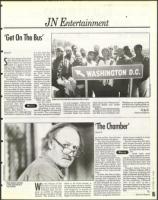
Scanned image of the page. Keyboard directions: use + to zoom in, - to zoom out, arrow keys to pan inside the viewer.
October 18, 1996 - Image 103
- Resource type:
- Text
- Publication:
- The Detroit Jewish News, 1996-10-18
Disclaimer: Computer generated plain text may have errors. Read more about this.