

arenting
C
When divorced parents
begin new relationships,
children need to be
reassured.
JOAN KRISTALL AND
GAIL LIPSITZ
SPECIAL TO THE JEWISH NEWS
X" Factor
rusing down Franklin Road, a
luxurious car sports a license
plate announcing "IM HIS X."
Cars have long been status
symbols, but what would motivate
someone to use this vehicle to
broadcast her marital status? The
message here suggests the am-
bivalence of many divorced peo-
ple who think they are ready for
new relationships, but still define
themselves in terms of their ex-
spouse.
When a divorced parent has
one foot in the past and the other
foot in the future, how are the chil-
dren affected? Whether anxious
or eager about starting a new
chapter in their lives, parents
may find that carrying over
unresolved issues from a past
marriage can create problems
for their children. These is-
sues frequently surface when
a parent begins a new rela-
tionship.
Children of divorce are ex-
periencing events that dra-
matically affect them but that
are beyond their control. They
feel powerless because they
can't reverse the train of
events and get their par- -
ents back together. Many
children wonder if they -
have contributed to the
breakdown of the marriage.
Parents can make this tran-
sition less painful by helping
their children recognize and
accept what they can and can-
not control.
First, assure your child that
"It's not your fault. Adults are
in charge of the initial decision
to divorce and in charge of
whatever will happen now."
Consider your child's age and
maturity level in deciding how
much information to disclose
about the reasons for the di-
vorce.
In addition, parents should
tell their children honestly if
they are not getting back to-
gether, and follow up with ap-
propriate behavior. Children
are confused when one parent
keeps coming back to the
house, and frightened if they
hear arguments about matters
like finance or custody, suggest-
ing that their parents are not able
to take care of them. Issues be-
tween divorced parents should be
discussed privately.
The legal aspects of divorce can
be overwhelming to children.
Again, children need to know that
adults are in charge here. Rabbi
Ervin Preis of a Baltimore Ortho-
dox congregation points out that
divorce, both civil and religious,
severs a legal union between the
parents only. According to Jewish
law, a Jewish divorce, called a get,
is necessary so that both parties
can re-marry. Ideally, the legal di-
vorce should not mean the disso-
lution of the relationship between
parents and child.
Getting involved with another
adult after divorce can be daunt-
ing, partly because of the fear of
repeating past mistakes and the
difficulty of breaking old patterns.
But divorce is an opportunity to
learn and grow, to focus on one's
strengths as well as on changes
one would like to make.
If the adults reach a clearer un-
derstanding of why the marriage
dissolved and what their roles
were, they can more successfully
undertake new relationships. But
they must also reach some emo-
tional closure and resolve feelings
of anger, bitterness and regret.
Children feel insecure if they
think their parents are falling
apart emotionally. Seeking pro-
fessional help and support for both
parents and children can be ben-
eficial.
Parents also need to set their
goals consciously. As one divorced
mother put it, "I can direct most
of my energy to finding another
husband, or I can live a full life
with the possibility that marriage
may not be in the picture."
Divorced adults usually are
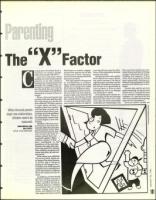
ILLUSTRATION BY BARBARA FRI EDMA
The'
101