

BACK TO SCHOOL
MAVEN
Fiscal Fitness
Continued from preceding page
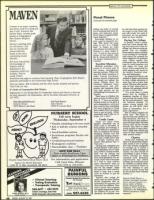
A maven is an expert, someone
who knows what he's doing and
does it well. Someone like
Sammy Semp, seventh grade
teacher at Congregation
Beth Shalom Religious
School.
Sammy's teaching skills
are well known. Last
year, he received the
annual Schochet
Award as the area's
outstanding Jewish
educator.
But more importantly,
his knowledge of
Judaism and his
dedication to his
profession inspire his
students. They're
proud of their
Jewishness and eager to continue their learning. Many Congregation Beth Shalom
graduates participate in the Community High School.
Visit our classes. Talk to Sammy and the other faculty, students and parents.
They'll tell you why...
It's better at Congregation Beth Shalom.
Registration is now being taken for September classes (and there's a discount
for early payment). For information, call Cy Servetter, Education Director, at
547-7970.
West Bloomfield Branch
Doherty School
3676 Walnut Lake Road
Oak Park Branch
Avery School
14700 W. Lincoln Blvd.
NURSERY SCHOOL
Fall term begins
Wednesday, September 4
• Flexible scheduling to fit your needs
• Full or half-day sessions extended
days
• Lunch/breakfast options
• Enrichment programs: Secular and
Judaic
• Certified/experienced teachers
• Kindergarten readiness
• Parent-Toddler class — Weekdays
NEW FOR FALL
First Grade. Readiness Class
Open to Kindergarten Students
Formerly United Hebrew Schools Nursery School
Agency for Jewish Education
21550 W. 12 Mile, Southfield, MI 48076
For information and application
Call Carol Gale, Director
356.7378 or 354-1050
PAINFUL
BUNIONS
LYNNE MASTER, M.Ed
Owner, Director
68
FRIDAY, AUGUST 23, 1991
• Clinical Teaching
• Testing/Evaluation
• Therapeutic Tutoring
Comfort, Quality Fit and Service
for 75 years
545-6677 • 433-3323
26221 Southfield Road
(between 10 and 11 Mile Roads)
25201 Coolidge, Oak Park
4036 Telegraph, Bloomfield Hills
HackShoes
(313)
557-4230
stilling the habit of saving,
you're teaching kids about in-
terest and long-term goals.
Don't forget to applaud addi-
tional deposits:'
Encourage children to at-
tach a goal to long-term sav-
ings. Talk about the lump
sums as part of a "college
fund" or money for some
other distant but desired end.
Giving it a name makes it
real. "I used my bar mitzvah
money to buy stocks," says
Mr. K., whose early interest in
the market blossomed into a
vocation.
Youthful Mistakes
Making mistakes with
money is, of course, part of
the money management
learning process. When chil-
dren buy faulty products or
make unwise purchases,
parents should commiserate
but should not replace the
money. Talking about the
situation enhances trust,
comprehension and self-
esteem, and reassures them
that their parents are not
withholding love because of a
blunder.
Treat loans to children the
same as loans to adults. Says
Mrs. S., "I have no problem
lending money to the girls if
we're shopping in a store and
they want to buy something
but have forgotten to bring
their wallets. But I do expect
them to pay me back. I think
sometimes they'd like me to
forget, but I don't:'
Credit Cards
There are times when
specific, controlled use of
credit cards is advisable. If
both parents are working, it
may be difficult to squeeze in
time on weekends for family
shopping. Parents may feel
comfortable lending a respon-
sible teen a credit card to pay
for certain clothing pur-
chases. This gesture says "I
trust you."
Giving kids unlimited use
of their parents' credit card or
a free-spending one of their
own, however, invites trouble.
Kids end up feeling the
money supply is unlimited.
Give them guidelines. For ex-
ample, never send a teen-ager
to a mall to shop without
some instruction such as
"Don't pay more than X dol-
lars for the slacks:' Show
teen-agers the credit card bill.
Make it clear that a check
must be written to pay for
purchases.
Parents who cosign for
credit cards for their children
should emphasize that re-
. sponsibility for payment still
rests with the children. They
need to stress that cosigners
are legally responsible should
the children fail to pay. Fur-
thermore, the children must
be told that their parents do
not expect to pay these bills
and will revoke the cards if
payments are not promptly
made by their children.
Paying For College
In general, today's young-
sters can't earn enough dur-
ing their teen years to pay for
college, but there are some ex-
penses they can shoulder.
Some parents expect children
to pay nothing for undergrad-
uate school but assume the
whole obligation for graduate
work. Others require that
undergrads pay for personal
items or travel expenses, and
still others for room and
board. Who's responsible for
what depends very much on
the family's financial situa-
tion and philosophy.
An appropriate time to ask
children to begin contributing
to their college education is
when they are in junior high
school. Discuss what percen-
tage of their after-school or
summer job earnings should
go into a college fund.
"I've never seen a young
person hurt by working a
moderate number of hours
and putting the money away
for his own education," says
the financial planner. "It
makes young people feel
grown up and gives them
pride in themselves. It's a
great experience."
Mrs. S. takes a slightly dif-
ferent view. "We expect to
pay for Dara and Lauren's col-
lege education," she says. "I
hate the idea of their graduat-
ing with large debts and then
having their options limited
because they have to make
money quickly to repay them.
But I think they should pay
some of their expenses with
their earned money!'
Charity
Along with teaching chil-
dren to be financially respon-
sible, instill a love of giving.
Not only should youngsters
be brought up to donate a
portion of their earnings to
charity, but they should be
encouraged to give of them-
selves, perhaps by doing
volunteer work. Birthdays,
anniversaries and Jewish
holidays are wonderful times
for children to extend them-
selves on behalf of others. In
the end, learning to give
money to worthy causes will
be one of their most valuable
lessons.
Patricia Schiff Estess, a
freelance journalist specializ-
ing in personal finance, is a
former editor of Sylvia -
Porter's Personal Finance
Magazine. This article first
appeared in the Philadelphia
Jewish Exponent's Inside
magazine.
(1\