

Ever since Kunte Kinte made his star
*debut on ROOTS, even' more African
American babies'have been called Kunte
Kinte, KilzY, and other African names
than at any other time since the mid
sixties. But the African names spell far
more than enjoyment of the movie-in
fact, they spell the excitement of a peo
p e beginning to rediscover their iden
tity-after the severe blo of the slave
trade which stole us from our homes,
disrupted our * development, and robbed
us of our dignity.
In a time when many of our men and
omen alike sometimes appear to tum
a ay from their roots and act like wilde
people without a past or Mure, it is im- .
portant to sho that we kno who are
are-Africans in America-and Where
we came from, Africa. It is even more im
portant and beautiful, too, to sho that
•
•
rica
we are proud of the fact.
Kno ing our true identity gives us'
strength. Even today, there. are people
ho ould like for us to think that we
came from nothing, or from somewhere
we should be ashamed. Great * afChitec
ture (the pyramids, the Zimbabwe ruins,
the Benin wall, for example), * astron
omy, mathematics, science, the first
'kings and queens, Christianity and the
first man and woman-all have their .
roots in the same Africa that many of us
ere taught to disrespect and to fear.
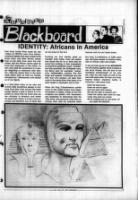
When the King Tuthankhamun exhibit
came to 'the United States from Egypt,
thousands of people looked at the rich
sculpture and jewelry with fascination
and pretended to themselves that the
"Boy King" was someone other than an
African, even with his beautiful' black
z
c
�
CD
m
::D
...4
a
features and his cerr-o ed braids.
But King TU�3fl hamun of 3,<XXJ years
ago, Ii e black· people of AmeriCa today,
as an African, plain and sim
In the next few issues of the ADVANCER
we will explore together at it means to
say we're African. We ill look at the
onderful achievements of our peo
ple-that not only make us look at our
past with great pride, but help us to look,
beyond today's shameful reality, to
tomorro -with great hope.
Great e were once.
Great we will be again
And now after dark slavery,
We see the light at tunnel's end
Today the chains don't bind our legs
Today they bind our minds.
We're working now to cast them off
and uplift all mankind.
.
-,
• • • • • • • • • • • • • • •• • • • • • • • • • • • • • • • • • • • • • • • • • • • • • • • •• L�t &IS sho others E RE OM BOD Y! ••••••••••••••••••••••••••••••••••••••••••••••••