

AUGUST 8 • 2024 | 9
J
N
That led to the exploratory committee,
which was headed by Danielle Gordon, a
local mental health therapist who works
with those who have pregnancy and post-
partum issues. Through parlor meetings,
fundraising and crowdfund-
ing, JFF advocates in Detroit
raised the $150,000 necessary
to bring JFF to town.
As a therapist, Gordon says
she works with moms all the
time facing shame and stigma
for infertility.
“It’s really important to have resources
in our community, in our Detroit com-
munity and in our Detroit Jewish com-
munity to help with that,” she says. “So
not only is this a huge financial relief that
also works with Hebrew Free Loan and
pulls in other community organizations
like Federation and JBaby, but also just
knowing that there is support for people
going through this, that these people
aren’t alone, I think is so important.”
The national organization is in its ninth
year. Started in 2015 in Atlanta, Georgia,
Frank says JFF’s mission is personal. Her
three kids were born from various fertility
treatments, she says, adding that she was
living in Israel when she did IVF with her
first two.
Though she went through the roller
coaster of emotions that goes along with
the infertility journey, she says, the IVF
itself in Israel was free. Returning to the
United States, she says, she was struck by
the price tag on IVF and fertility treat-
ments. Hence her organization was born.
“We’ve evolved over the years with amaz-
ing partners to help us grow,” Frank says.
The community is ready for a resource
like JFF, says Rabbi Jennifer Kaluzny of
Temple Israel, who was part of the effort
to bring JFF to Detroit and on the advi-
sory committee. She counsels couples
about genetic disease, because Ashkenazi
Jews carry them in higher numbers, and
says having such a resource
available can help open doors
for couples; it’s a cause close
to home, she adds, as she
and her husband were car-
riers for the same mutation
of the same genetic disease
and used IVF to build their
family.
Bolstering comfort and familiarity
around options for family planning and
helping them be in reach are all positives,
she says. “I hope it will help people have
healthy children and grandchildren,” she
says. “To have a place to go to start when
you have no clue where to start, and have
it be in a Jewish context I think is a really
beautiful thing.”
Brian*, who is a transgender man based
in southeast Michigan with his husband,
Aaron*, says they found out about JFF
at the start of the summer through their
fertility clinic. They were embarking on
their second attempt at embryo banking
and were trying to figure out how to pay
for it.
“I think we were really fortunate to be
in a place where we could pay for our first
round of treatment without a grant, and
we were really lucky to have the support
from our families to do that,” he says.
“Then we realized we were going to need
another round of treatment, which had
not been on the cards.”
Being an LGBT couple, they were at
first nervous about applying for JFF’s
fertility grant, then relieved to see from
the organization’s website that they were
more than welcome to apply. “We found
the experience very amicable and friendly
and proactive,” he says. It all moved for-
ward quickly, from applying to hearing
back, he adds.
JFF helps take the sting out of the cost
and provides medication discounts and
a community of support. “I don’t know
if we would have looked elsewhere — it’s
not widely publicized what grants are
available,” Brian says.
“We felt like it was the right fit for us,
and I don’t know what we would have
done if we hadn’t received a grant.”
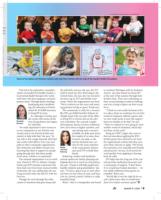
Some of the babies and first-time mothers who built their families with the help of the Jewish Fertility Foundation.
Danielle
Gordon
Rabbi
Jennifer
Kaluzny
Jewish Fertility Foundation assists
Metro Detroiters through their infertility journeys.
COURTESY OF JEWISH FERTILITY FOUNDATION
COURTESY OF JEWISH FERTILITY FOUNDATION