

JUNE 27 • 2024 | 29
J
N
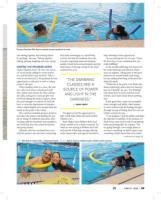
Former Detroiter Ella Azaria teaches Israeli students to swim.
continued on page 30
also dining together and evening friend-
ly meetings,
” she says. “Sitting together,
talking, playing, laughing and even crying.
”
KEEPING THE PROGRAM GOING
Hadar Dikstein, from Tel Aviv, saw a post
on social media calling for swim instruc-
tors and decided to get involved. “
After a
week as an instructor, I felt gratitude for the
opportunity to take part in such a unique
project,
” she says.
When funding came to a close, she and
two other instructors volunteered until
they raised more money for their salaries,
she adds, noting how many people were
involved helping the project happen, from
the pool manager to contacts in each kib-
butz, to even the department of transpor-
tation, which helped move people from the
hotels to the pools in the winter.
Her work has included going to hotels to
introduce the project and finding the peo-
ple in charge of children’s education, then
working with the hundreds more people in
the Dead Sea area who joined for private
and group classes.
Dikstein, who has concluded her term
with the project, says she knew swimming
had many advantages as a mind-body
activity, but that the feedback from the
evacuees regarding improved sleeping
quality, bonds between participants and the
importance of having a ritual in the chaos
surprised her a lot.
“I’m glad we had the opportunity to
offer a little help within the harsh reality,
”
Dikstein says.
Yaniv Hegyi, from Kibbutz Be’
eri, had
always wanted to be a better swimmer. So,
when he was staying at Kibbutz Ein Gedi
and saw the WhatsApp message offering
swim classes half a year ago, he decided to
take advantage of the opportunity.
“It was amazing for me,
” he says. “From
the first class, it was something that was
really fulfilling.
”
In the months following, he’s improved
his swim technique and distance endur-
ance, he explains. Taking time in the pool
improves his mental health and energy,
he says, adding that being in the pool also
clears his mind.
“When I’m in the pool, I can think only
about swimming; where does my hand go,
how do I breathe,
” he says. “I’m thinking
only about how to swim and how to do
it better, and I don’t think about anything
else.
”
It also gives him a sense of accomplish-
ment, strength and ability, which stands
in stark contrast with the feelings brought
through trauma of feeling their lives are out
of their control, he says.
“I can progress. I feel the ability, and that’s
the opposite of inability, of the trauma, so I
think it has some kind of role in my getting
better psychologically,
” he explains. “We
are going through a very tough phase in
our lives, something we didn’t expect, and
something I didn’t know that such a hard
LEFT: Ella Azaria swims with a displaced Israeli. RIGHT: Azaria went to hotels to give children swim lessons.
“THE SWIMMING
CLASSES ARE A
SOURCE OF POWER
AND LIGHT IN THE
DARKNESS.”
— YANIV HEGYI