

28 | APRIL 11 • 2024
J
N
W
hile the main
scheduling
conflict between
Passover, finals and graduation
ceremonies is happening in
East Lansing at Michigan State
University, Jewish students and
faculty affiliated with other
colleges and universities in the
state are also grappling with
Passover’s late fallout on the
Gregorian calendar.
Moving forward, colleges
and universities across the
state with a sizeable Jewish
student and faculty body
are revamping their policies
to recognize Jewish holiday
observances. Even though
they may still schedule classes
and exams, faculty and
administrators are advised
whenever possible not to
schedule the first day of the
semester, major exams or
graduations on the main
Jewish holidays.
OAKLAND UNIVERSITY
Although Oakland University,
as a public institution, does
not observe religious holidays,
a statement on its Diversity,
Equity and Inclusiveness
website listed Passover as a
work/restrictive holiday.
The website stated: “The
University will continue to
make every reasonable effort
to help students avoid negative
academic consequences when
their religious obligations
conflict with academic
requirements.”
Elysa Koppelman-White,
associate professor of ethics
at Oakland University, said
she has not planned any
finals during Passover for her
students. It is her first year
back teaching on campus after
giving instruction exclusively
online in the years following
the pandemic.
This year, there are about 70
students in the five classes she
instructs. Because she teaches
philosophical classes, most of
her finals are in essay form and,
therefore, take longer to grade.
Because of the school schedule,
the finals of one of her classes
ran until 6:30 p.m. on April 22,
which is the evening of the first
seder.
When she received the finals
schedule at the beginning of
the semester, Koppelman-
White, who attends AISH in
Huntington Woods, informed
the registrar and asked if she
could either switch the day of
her final or find someone who
is not Jewish to proctor her
final. She received no response
and then went to the head of
her department.
“I said, this is quite
problematic, and I asked if I
could assign a take-home final
and have it due a different day
than scheduled.”
She continued: “I got the
clearance from my department
head, but because I am a rule
follower, I double-checked and
made sure that the final could
be given this way. So, my take-
home final will be issued ahead
of the scheduled final day and
will be handed in on the day
the final was scheduled.”
White told her students that
she is going to end classwork
a week ahead of time. The
Monday of finals week will be
used for reviews and then later
that week, students can begin
to write their papers on their
laptop in class.
White was told by the
provost’s office that the way
she was handling her finals was
within the guidelines of the
faculty senate’s bylaws.
White said that she brought
to light the logistics of what it
means to have a Jewish faculty
member or any other religious
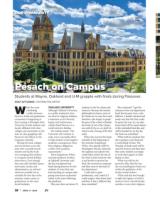
Students at Wayne, Oakland and U-M grapple with finals during Passover.
STACY GITTLEMAN CONTRIBUTING WRITER
Pesach on Campus
OUR COMMUNITY
Wayne
State