

MARCH 21 • 2024 | 21
J
N
Rahat, the Arab Bedouin city in
southern Israel, where they sat
and listened to the Bedouin and
heard their stories.
Another stop was visiting
Kibbutz Kfar Aza, where the
rabbis witnessed the remnants
of the massive devastation and
horror of Oct. 7.
They also went to the site of
the Nova Music Festival massa-
cre and Kikar HaHatufim, the
hostage square.
“The experience was over-
whelming but incredibly
important,
” Rabbi Loss said.
“
As much as you hear the sto-
ries, until you stand there and
become aware of what hap-
pened, it sometimes feels a bit
distant. When you’re there, you
know what happened in a very
direct way.
”
Since their return, the rabbis
have had opportunities to share
their experiences — what they
witnessed and heard on the
trip — with their communities.
An important aspect of that is
spreading the message plastered
everywhere in Israel right now,
reflecting Israeli society’s sin-
gular focus: Bring the hostages
home.
“That was part of this, the
opportunity to come back and
make sure this still is front-
page news for people,
” Rabbi
Schwartz said. “There are 134
hostages still being held in Gaza.
We want to make sure it’s part
of daily conversations, that we’re
still working to bring the hostag-
es home.
”
Rabbi Schwartz, reflecting on
the trip, says he’s amazed by the
resilience and unity of the Israeli
people.
“From the wounded soldiers,
to survivors of the music festival,
to the Bedouin community, it
was one story after another of
bravery, love and making sure
nobody was left behind,
” he said.
While the trip was solemn
in many respects, Rabbi
Rubenstein says meeting with
wounded soldiers who were
making strides in their recov-
ery process gave him a feeling
of hope.
“Their sense of a future is so
strong you can’t not feel hope
and determination,” he said.
As part of the trip, each of
the rabbis made a donation to
those in Israel on behalf of their
congregations. The donations
were in the form of massive
duffel bags filled with goods and
supplies needed by IDF soldiers,
including long underwear, socks,
hats, sleeping bags and more.
Some donated supplies also
went to evacuees living in hotels.
While the tangible things
brought by the rabbis were
important, Rabbi Kantor says
even more important was the
emotional and psychological
support they brought there and
then brought back for their
communities at home.
“To be able to come back and
to relate those stories in a way
that is intimate and real is very
powerful,
” he said.
Many of the rabbis are already
making plans for their next trip
to Israel, and stress the need for
volunteers there right now.
“If people can make it, they
should go,
” Rabbi Loss said.
“These opportunities are
important. The impact of our
presence is significant.
”
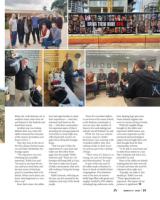
Entire mission group
Across construction sites and blank walls
everywhere are calls to bring the hostages home.
Rabbi Kantor on his
way to the airport
with two full
duffle bags of
donations
Rabbi Schwartz
dropping off
donated supplies
to Israeli evacuees
staying in hotels
Detroit rabbis meet with an Israeli soldier wounded in
Gaza who was going through rehab at a Tel Aviv hospital.