

50 | APRIL 14 • 2022
P
assover for most members of
the Detroit Jewish community
typically includes a recitation of
the Haggadah, sometimes a contemporary
or family version, a meal that includes
ceremonial foods such as charoset and
matzah, along with Ashkenazi fare —
chicken soup with matzah balls, chopped
liver, roast chicken, tzimmes and brisket.
Pesach songs may be sung, and children
enjoy looking for the hidden Afikomen
matzah. Families with a Sephardic
background may enjoy a somewhat
different menu. But, in other parts of the
world, traditions vary.
While all seders include charoset to
symbolize the mortar used by Hebrew
slaves building for the pharaoh, its
components vary in
different countries. Deborah
Morosohk, Temple Beth El’s
education director, recently
presented a program titled
“Passover around the World.”
She explained that customs
and food evolved as Jews
absorbed some aspects of local cuisine,
using foods from available crops and
animals.
Apples, for example, are common in
Europe so Ashkenazi Jews use them in
charoset. In South Africa, Jews stew apples
with cinnamon and cloves for dessert,
she says. In North Africa and the Middle
East, dates, figs and almonds are plentiful
so they are used in charoset and other
foods. Morosohk adds that in Gibraltar
the Jewish community includes dust from
bricks in their charoset to intensify the
memory of the Hebrew slaves toiling in
Egypt.
Ethiopian Jews made matzah from
chickpea flour, Morosohk says, and ate
lamb as these foods were easy to obtain.
They do not eat yogurt, butter or cheese
during Passover. Also, Ethiopian Jews
read the Passover story from Exodus in the
Torah rather than a Haggadah.
Israeli families typically maintain
some of the traditions of their family
origins. Arye (Larry) Schwartz, a former
Detroiter and Jerusalem
resident since the 1970s, says,
“The customs are passed
down from generation to
generation, especially special
food dishes on holidays. A
family that emigrated from
Tunisia 70 years ago will still
maintain a special dish served during the
Pesach seder today. This applies to all
the communities, especially from first-
generation new immigrants. New olim
(Israeli immigrants) will generally do
exactly what they did before they arrived,
without incorporating any new ‘Israeli’
customs.”
However, he adds that those who have
lived in Israel for a longer time often
include a mix of dishes from different
cultural and religious traditions. He has a
friend — a Sephardic chef — who makes
gefilte fish (an Ashkenazi dish) for his
family seders.
DIVERSE PRACTICES
One increasingly popular Israeli Passover
custom is the Mimouna — a post-Pass-
over celebration that includes extensive
desserts, music and dancing. Mufleta — a
Moroccan crepe/pancake and donuts are
featured. Prosperity is a Mimouna theme,
reflected in gold-colored decorations and
PASSOVER
Deborah
Morosohk
Arye
Schwartz
Pesach celebrations embody many
religious and local traditions.
Worldwide
Passover Traditions
SHARI S. COHEN CONTRIBUTING WRITER
continued on page 52
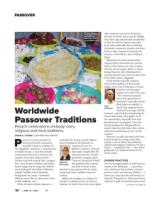
Lavish platters of
sweets are
featured at an
Israeli Mimouna.