

APRIL 1 • 2021 | 13
Carl Levin’s new memoir
chronicles his 36-year
Senate career.
JACK LESSENBERRY CONTRIBUTING WRITER
Q & A
with Sen. Levin
JACK LESSENBERRY
CONTRIBUTING WRITER
I talked with Sen. Levin at length
when his book was published. Here
are highlights of our conversation.
Did being Jewish influence how
you saw your role?
It surely did. I think the values in
Judaism are important — the values
of being charitable, of thinking of
others, the important Jewish values
which I learned early in life: To take
care of the poor, of each other — to
watch out for each other and treat
others the way we want to be treat-
ed. And thinking about the legacy
of generations of antisemitism has
made me very sensitive to others
who are victims of prejudice and
discrimination.
There’s long been a belief that
Congress is broken, but peo-
ple now appear to believe that
more than ever.
I agree. There is increased divisive-
ness — it has gotten worse over
the last decade. There are some
points where it is totally dysfunc-
tional. This started, I think, with
the Tea Party and their leader [for-
mer Speaker of the House] Newt
Gingrich, and their idea that you
should not compromise. We have to
understand that unless you are will-
ing to compromise, you aren’t going
to reach your goals.
When I was on the City Council,
I learned to listen to the other guy,
and that he has a point of view.
You don’t have to agree with it, but
you darned well better understand
it. That’s how you find a way to
achieve the common good.
Now it is true that if one party
has a majority in both houses and
holds the presidency, you can get
away with a lot of ideological rigidi-
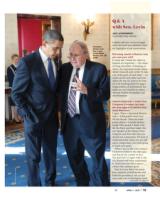
President
Obama and
Sen. Levin
at the White
House, Oct. 28,
2009.
COURTESY OF WSU PRESS
continued on page 14