

health
House
Call
with
Dr. Ruben
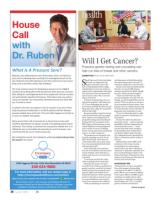
Howard and Sarah Katz, left, meet with Certified Genetics Counselor
Rachel Hagen, MS, CGC and Michael Simon, M.D., MPH, medical director of the Cancer
Genetic Counseling Service, both of the Barbara Ann Karmanos Cancer Institute.
TIMOTHY J. HAUNERT
Will I Get Cancer?
Proactive genetic testing and counseling can
help cut risks of breast and other cancers.
What Is A Pressure Sore?
Bedsores, also called pressure ulcers & decubitus ulcers, are injuries to
LJŽƵƌƐŬŝŶΘƵŶĚĞƌůLJŝŶŐƟƐƐƵĞƌĞƐƵůƟŶŐĨƌŽŵƉƌŽůŽŶŐĞĚƉƌĞƐƐƵƌĞŽŶƚŚĞ
ƐŬŝŶ͘ĞĚƐŽƌĞƐŵŽƐƚŽŌĞŶĚĞǀĞůŽƉŽŶƐŬŝŶƚŚĂƚĐŽǀĞƌƐďŽŶLJĂƌĞĂƐŽĨLJŽƵƌ
body, such as the heels, ankles, hips & tailbone.
dŚĞŵŽƐƚĐŽŵŵŽŶƌĞĂƐŽŶĨŽƌĚĞǀĞůŽƉŝŶŐĂƉƌĞƐƐƵƌĞƐŽƌĞŝƐĂlack of
ƐĞŶƐĂƟŽŶΘŶŽƚďĞŝŶŐĂďůĞƚŽĨĞĞůƚŚĞƉƌĞƐƐƵƌĞǁŚĞŶƉƌĞƐƐƵƌĞŝƐƉƌĞƐĞŶƚ͘
ŌĞƌƐŝƫ
ŶŐĨŽƌĂƉƌŽůŽŶŐĞĚƉĞƌŝŽĚŽĨƟŵĞ͕ƉĞŽƉůĞǁŝƚŚŶŽƌŵĂůƐĞŶƐĂƟŽŶ
ǁŝůůĂƵƚŽŵĂƟĐĂůůLJƌĞƉŽƐŝƟŽŶƚŚĞŵƐĞůǀĞƐ͘dŚŝŶŬĂďŽƵƚǁŚĞŶLJŽƵǁĂƚĐŚĂ
ŵŽǀŝĞ͕ĨŽƌĞdžĂŵƉůĞ͘zŽƵŝŶǀŽůƵŶƚĂƌŝůLJƌĞƉŽƐŝƟŽŶďĞĐĂƵƐĞLJŽƵƌďƌĂŝŶƚĞůůƐ
LJŽƵ͞ŝƚ͛ƐƟŵĞƚŽŵŽǀĞ͘͞
/ŶƉĂƟĞŶƚƐǁŚŽŚĂǀĞŶĞƵƌŽƉĂƚŚLJŽƌůĂĐŬŽĨƐĞŶƐĂƟŽŶƚŽĂŶĂƌĞĂŽĨƚŚĞŝƌ
ďŽĚLJ͕ƚŚĞƉƌĞƐƐƵƌĞͲƌĞůĂƚĞĚƉĂŝŶŝƐŶŽƚĨĞůƚΘƉĂƟĞŶƚƐǁŝůůƚŚĞŶĚĞǀĞůŽƉ
ƉƌĞƐƐƵƌĞͲƌĞůĂƚĞĚƵůĐĞƌƐƚŽƚŚĞƐŬŝŶ͘dŚŝƐŵŽƐƚŽŌĞŶŚĂƉƉĞŶƐŝŶƚŚĞĨĞĞƚĂƐ
ŝŶĐĂƐĞƐŽĨĂĚŝĂďĞƟĐŶĞƵƌŽƉĂƚŚLJ͘
DĂŶLJǁŽƵŶĚĐůŝŶŝĐƐǁŝůůĞƌƌŽŶĞŽƵƐůLJƚƌLJƚŽƚƌĞĂƚƉƌĞƐƐƵƌĞƐŽƌĞƐǁŝƚŚ
ƌĞƉĞƟƟǀĞĚĞďƌŝĚĞŵĞŶƚ;ƐĐƌĂƉŝŶŐĂǁŽƵŶĚͿŽƌďLJĂƉƉůLJŝŶŐƐƉĞĐŝĂůƚŽƉŝĐĂů
ointments. This is faulty, as treatment for any pressure related ulcer is to
Žŋ
ŽĂĚƚŚĞƐŽƌĞŽƌŝŵŵŽďŝůŝnjĞƚŚĞĞdžƚƌĞŵŝƚLJĨŽƌƵƉƚŽϰͲϲǁĞĞŬƐ͕ŵŽƐƚ
ĐŽŵŵŽŶůLJǁŝƚŚƚŚĞƵƐĞŽĨĂƚŽƚĂůĐŽŶƚĂĐƚĐĂƐƚ͘
EŽƚƚƌĞĂƟŶŐƚŚĞǁŽƵŶĚ͕ďƵƚƚƌĞĂƟŶŐƚŚĞƵŶĚĞƌůLJŝŶŐreason why you have
the woundŝƐƚŚĞĂŶƐǁĞƌ͘
ϮϯϬϬ,ĂŐŐĞƌƚLJZĚ^ƵŝƚĞϭϭϵϬ͕tĞƐƚůŽŽŵĮĞůĚ͕D/ϰϴϯϮϯ
ϮϰϴͳϲϮϰͳϵϴϬϬ
&ŽƌŵŽƌĞŝŶĨŽƌŵĂƟŽŶ͕ǀŝƐŝƚŽƵƌĐŽŶƚĂĐƚƉĂŐĞĂƚ
ŚƩƉƐ͗ͬͬĞŶĐŽŵƉĂƐƐŚĞĂůƚŚĐĂƌĞ͘ĐŽŵͬĐŽŶƚĂĐƚ
Video Consults now available with Dr. Ruben on WHATSAPP
248-672-9775
Bruce Ruben, M.D. is the Founder and Medical Director of
Encompass HealthCare & Wound Medicine, Michigan's premier
ŽƵƚƉĂƟĞŶƚ/ŶĨĞĐƟŽƵƐŝƐĞĂƐĞĂŶĚtŽƵŶĚĂƌĞĞŶƚĞƌ͘
000000
38
July 26 • 2018
jn
ELIZABETH KATZ SPECIAL TO THE JEWISH NEWS
S
arah Katz was 22 when her father,
Howard, was diagnosed with
stage 4 pancreatic cancer. She
had recently graduated from college
and had plans to move out of state to
explore career opportunities. She decid-
ed to stay home when she learned his
type of cancer came with a 5 percent
chance of survival.
“I think it’s traumatizing when you
look up the statistics,” said Sarah, now
28. “It was challenging, but my dad
never had an attitude that this was any-
thing other than a blip. He was positive
when he felt awful.”
Because her father wanted to be pro-
active for both Sarah and her younger
sister, Emily, he encouraged them to
get genetic testing and counseling. He
tested positive for a mutation in the
BRCA2 gene, which increases an indi-
vidual’s likelihood of being diagnosed
with a variety of cancers, including
breast, ovarian, pancreatic and prostate
cancers, as well as melanoma.
“My perspective on the genetic test-
ing and counseling was do it for my
kids,” Howard said. “Once that test
came back positive for my gene muta-
tion, I recommended that both Emily
and Sarah get tested.”
Sarah and Emily were tested late
last year at the Barbara Ann Karmanos
Cancer Institute, where Howard is a
patient and where he was tested and
counseled.
“I went back and forth for a little
while on getting tested,” Sarah said.
What gave her pause were ques-
tions like if test results are positive for a
genetic mutation, would she be denied
health insurance for increased screen-
ings she might need? Would she be
denied life insurance? With a potential
positive result and an increase in ovar-
ian cancer likelihood, what would it
mean if she wanted to have children?
“With my dad being so connected
with Karmanos, it kind of skewed my
idea about being tested,” she said. “It
seemed very ignorant to not be tested.”
Results came back and Sarah learned
that she, too, has the BRCA2 gene
mutation carried by her father, though
her sister Emily came back negative.
“There was relief when my sister
was tested negative,” she said. “For me,
though, you go through all that you can
control. There’s so much you can do as
far as screening for breast cancer. I face
having to have an oophorectomy by age
35 (removal of the ovaries). The idea of
going into early menopause is scary.
“It’s a lot to think about but I would
rather be proactive. Monitoring is my
best option.”
Because her father has advanced
pancreatic cancer — and her paternal
grandfather had been diagnosed and
survived prostate cancer — Sarah
and her sister had reason enough to
be genetically tested. Another factor
was that her father’s side of the fam-
ily is Ashkenazi Jewish. Howard Katz’s
father is Lithuanian and his mother is
German.
Michael Simon, M.D., MPH, medi-
cal director of the Cancer Genetic
Counseling Service at Karmanos,
said most Jews are able to identify as
Ashkenazi or Sephardic. Sephardic Jews
have ancestral lineage to Spain or the
Iberian Peninsula. Ashkenazi Jews have
relatives from Russia and other parts of
Eastern and Central Europe.
AN INCREASED RISK
Ashkenazi Jews are more susceptible
than other groups to having either
a mutation in the BRCA1 or BRCA2
genes. BRCA is an acronym for BReast
CAncer gene. BRCA1 and BRCA2 gene
mutations are similar and are often
discussed as a “package,” according to
Rachel Hagen, M.S., CGC, a certified
genetic counselor at Karmanos.
continued on page 40