

jews d
on the cover
in
the
Picking
Up The
PACE
Consultants help the Whitney
and others go green with
public-private funding.
STACY GITTLEMAN CONTRIBUTING WRITER
W
continued on page 12
10
October 5 • 2017
jn
What Is PACE?
JERRY ZOLYNSKY
hen it comes to saving energy in Detroit, a green
movement to provide businesses the up-front
capital they need to seal leaky windows, install
new heaters and coolers and even put up some solar panels
is picking up PACE.
In the first project of its kind in Wayne County, the David
Whitney House and destination restaurant enlisted in a
private-public financing program called Property Assessed
Clean Energy (PACE) to upgrade the building’s heating and
cooling systems, update storm windows and rekindle its
opulent chandeliers with LED lighting.
PACE is a long-term financial tool that helps companies
and building owners pay for much-needed energy upgrades
without digging into capital expenses. Michigan passed
PACE-enabling legislation in 2010 and the state has two
active PACE programs, one in the city of Ann Arbor and
Lean & Green Michigan, based in Detroit, that serves 23
counties and 11 municipalities/townships statewide.
Through Lean & Green’s PACE program, over the next 20
years, the landmarked 19th-century house will save more
than $2 million in energy costs and eliminate 232 metric
tons each year from Detroit’s carbon footprint, the equiva-
Property Assessed Clean Energy (PACE) is a financing mechanism that
enables low-cost, long-term funding for energy efficiency, renewable
energy and water conservation projects, according to PACENation.us., a
national advocacy group. PACE financing is repaid as an assessment on
the property’s regular tax bill for up to 20 years, and is processed the
same way as other local public benefit assessments (sidewalks, sewers)
have been for decades. PACE financing may stay with the building upon
sale and is easy to share with tenants.
PACE is a national initiative, but programs are established locally and
tailored to meet regional market needs. State legislation is passed that
authorizes the establishment of PACE programs.
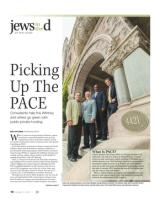
Andy Levin, founder/president, Lean & Green Michigan; energy efficiency consultant Jim Newman; Tupac Hunter, executive director
of government initiatives for Wayne County; and Bud Liebler, owner of the David Whitney House and destination restaurant.