

metro
WINNING
YOUR HIGH-CONFLICT
DIVORCE
NINA
Strategies for
Moms and Dads
Local expert offers advice on navigating high-conflict divorce.
Ronelle Grier
Contributing Writer
D
ivorce is stressful and complicated,
but a new book by attorney and
social worker Shelly Loomus of
Farmington Hills can help ease the way
for those who find themselves confused
and overwhelmed by the process — espe-
cially if they are involved in a high-conflict
divorce that can continue to be trouble-
some long after the divorce is final.
Winning Your High-Conflict Divorce:
Strategies for Moms and Dads (2015,
Manage Your Conflict LLC) is written in
straightforward language rather than com-
plex legalese, is filled with anecdotal exam-
ples from many people Loomus has helped
in her family law practice, and is organized
into chapters that make it quick and easy to
find information on specific topics.
The book is a step-by-step practical
guide for anyone going through divorce,
but is especially geared toward those
unfortunate situations where divorce turns
exceptionally nasty and vicious.
These cases often occur when one or
both parties have some kind of personality
disorder that includes irrational behavior
and a need to continue fighting. This usu-
ally makes the divorce lengthier and more
vicious than necessary and often results in
continuous trips to the courtroom years
later. The effects on the spouse trying to
cooperate — and the children, who are
often used as pawns — can be devastating.
Loomus, who is herself divorced, esti-
mates that 25 percent of all divorces fall
into the high-conflict category.
"They [high-conflict divorces] are per-
petual; they don't end:' said Loomus, who
also teaches family law at Henry Ford
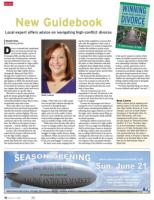
Shelly Loomus
College. "I felt I had a lot to offer people
who can't get their solutions through the
courtroom or through therapy"
Loomus said the court system is
designed to deal with individuals' legal
rights, and a lot of the conflict in these
divorces occurs outside the courtroom. Her
book provides strategies that have been
used successfully in high-conflict divorces.
"While many divorce books offer advice
on how to manage conflict, they are based
on the assumption that your adversary is
a rational person who wants to end the
struggle. In a high-conflict divorce, things
are different. When one person lives for the
fight, even willing to sacrifice your children
to win, you must engage Loomus said.
The book covers issues ranging from fil-
SEpso N
ing the initial complaint to concerns that
arise after the judgment is final, such as
disagreements over custody arrangements.
Loomus also includes a section on per-
sonality-disordered individuals: how they
operate, manipulate and litigate in order
to maintain their often-warped perception
of reality. Lies, personal attacks, exploit-
ing flexible parenting schedules, calling
the police or other authorities with false
complaints about alleged abuse and bad-
mouthing the other spouse in front of the
children are common tactics used by those
with personality disorders.
The book provides detailed advice on
how to deal with an unreasonable ex- or
soon-to-be ex-spouse in and out of the
courtroom. She also warns clients about
sending texts and emails that may come
back to harm them.
"Not every interaction has to be
responded to:' she said. "Be selective. Look
for the real purpose behind the email, text
or phone call. Sometimes they're just trying
to get you to engage:'
Loomus also encourages each client to
manage his or her "courtroom appearance
which means remaining businesslike and
refraining from angry outbursts in front of
the judge, and to develop a good filing sys-
tem for court documents, emails and bills
for shared expenses.
Hurting the children to get back at the
other parent is common in a high-conflict
divorce. This can range from forbidding a
child to attend dance classes or sleepovers
or allowing a child to stay out excessively
late, to calling Child Protective Services to
investigate the other home for no other rea-
son than to cause trouble for the ex-spouse.
For someone with a personality disorder,
the well-being of the children is secondary
0
www.sali
to the need to remain in control, which
makes the healthier parent's job harder.
Loomus urges parents to develop their
own relationships with their children's
teachers, coaches and doctors, and to
provide kids with fun experiences such
as sleepovers and family outings to offset
time spent doing homework and chores.
She promotes open communication, where
children are encouraged to talk about their
feelings without being made to feel guilty
for loving the other parent.
"The most important thing is to always
be your children's safe harbor; she said.
❑
Book Launch
Shelly Loomus will be speaking and
signing copies of her book, Winning
Your High Conflict Divorce, at 7 p.m.
Tuesday, June 23, at Adat Shalom
Synagogue in Farmington Hills. For
more information, visit www.
manageyourconflict.com . Loomus
will also speak on "Resolving Family
Conflict" at 7 p.m. Thursday, Sept.
10, at the Farmington Community
Library on 12 Mile, Farmington Hills.
To register, call (248) 553-0300 or
visit www.farmlib.org . Her book is
available online at Amazon or Barnes
& Noble or at the Book Beat in Oak
Park or the Self-Esteem Shop in
Royal Oak.
-
tiquesmar com
Sm Jun 2
Antiques Market
ANTI UES MARKE
9AM-4P
$6 • FRE PAR
S E oR RAI PET FRIE
AD
EAT
VER
WASHTENAW FARM COUNCIL GROUNDS, 5055 Ann Arbor-Saline Rd., Ann arbor, MI 48103 • Show Info or to become an exhibitor: 937-875-0808 or salinemarket@gmail.com
16 June 18 • 2015
2,1550