

ne woman came with
subway tokens and
tags from her dead
pets.
Another brought a heart, a gold dog
charm and a flower with a vibrant red
center. She was happy, she said, and
newly divorced.
They offer their cherished mementos
to Jennifer George of New York City
who works with her hands and hears
with her heart when she takes on a proj-
ect: making one-of-a-kind charm
bracelets and necklaces.
Clients bring their own small treasures
to which George adds from her collection
of everything from vintage Cracker Jack
toys to a single Trifari earring. "Short of
your hubcaps, I can pretty much use any-
thing that floats through your world,"
says the artist.
And though she loves the art of mak-
ing the bracelet, just as dear are the sto-
ries clients tell.
"Every piece has a story," she says, and
a name, bestowed by George upon com-
pletion. One necklace, which she calls
Valentine's Day, is festooned with red
hearts and belongs to a woman whose
parents met at a Valentine's Day party in
the 1930s. Each party guest received a
grab bag. Inside was a small item — one
for a boy, the same for a girl; the game
was to find the match. The necklace
owner's parents met when they matched
hearts.
Though known in the industry as a
fashion designer, George began her artis-
tic career making jewelry. She was 13
when she started taking jewelry-design
classes; at 15, she was working summers
as a jeweler's apprentice in Italy.
She also knew how to draw, thanks to
her grandfather, Pulitzer Prize-winning
cartoonist Rube Goldberg, of whom she
remembers, "He had the most enormous
ears."
George became a fashion designer,
married, had two children, divorced, then
left clothing design.
"Fashion is a 24/7 business," she says.
"You're on the most relentless sched-
ule." But because of her work in the
Continued on page 28
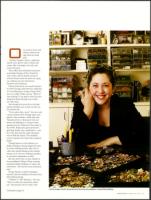
Jewelry designer Jennifer George learned to draw from her grandfather, cartoonist Rube Goldberg.
JNPLATINLJM • FEBRUARY 2006 •
27