
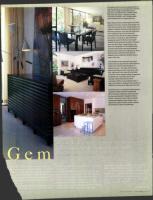

The original wall was removed separating the two
main floor bedrooms into one large master bedroom
with walk-in closets on either side, and two
bathrooms. The platform bed is covered in black
faille with white linens. A mahogany cabinet
encloses the television, and a Tom Wesselman
acrylic dominates the wall opposite the bed.
High ceilings and long windows grab views of the
property and the lake along one uninterrupted wall
in the living and dining rooms. A large Bertoia steel
sculpture, originally commissioned by Yamasaki for
this house, separates living room and dining areas.
In the daylight, the 96-inch glass and metal
Le Corbusier table reflects the outdoor view from
the windows. The fiberglass fabric light fixture
hanging just beyond the Bertoia is an original
Yamasaki fixture purchased at auction. Rising less
than 4 feet off the floor, it helps bring the room
down to a manageable size. The standing living
room floor lamp was also part of the Yamasaki
furniture and is located in its original place. Sandy
Schreier's black and white screen from Life
magazine covers, exhibited at the WA, frames a
corner of the room.
"The challenge in the living room was to find
furniture that was important but wouldn't fight the
outdoor view which pervades the house no
matter the season," says Lynda. She selected
sophisticated Italian furniture with clean, warm
lines, upholstered in the same off-white fabric,
and placed in three intimate seating arrangements.
Completing one conversation mix are four
moveable, leather hassocks that can be
rearranged to different conversational areas. A
large acrylic Natkin is displayed over one sofa and
a McEwen oil balances the other end of the room.
The kitchen area is a visual part of the living area.
Combining aesthetic appeal with functional
efficiency, Lynda matched the marble floor from
the foyer and extended it through the kitchen.
Powder-coated metal white cabinets and teak
cabinets from Madison Design Group in Troy
replaced the original cabinets; granite replaced
the old Formica counter and island tops.
tn;
arfoos maintains the integrity of a
ting the furnishings.
and built as if it were a commercial building,
',which makes sense considering large commercial
'buildings were Yamasaki's niche (World Trade
',:enter, NY; McGregor Building, WSU, Detroit;
'ample Beth El, Birmingham). Like many of
lasaki's buildings, walls of windows were part
e structure.
and Lynda knew some changes had to be
' ,adapt the house to their lifestyle. The
edroom were main areas
kitchen and the mas
of concern.
At the same time, it was very important that
they maintain the integrity of the architectural
design. To help them achieve their goal, they
received permission to video tape and photo-
graph the entire house, which still contained the
original furniture Yamasaki had purchased prima-
rily from Denmark. They also spoke with
Yamasaki's sons, Kim and Taro, who provided
more detailed information about the house.
The house has a very calming effect on both
Lynda and I, probably because Yamasaki made
the view of the outdoors an integral part of
almost every room," says Ron. "The house was
sited to maximize the views."
-
—Ruthan Brodsky
STYLE AT THE JN • SEPTEMBER 2001 •