

saying Goodbye
New prenatal hospice program serves
families of infants "born dying."
SHELLI LIEBMAN DORFMAN
Staff Writer
endy Winkler understands that even more devastat-
ing than a pregnant mother carrying a child she
knows may not survive, is a woman or family going
IVIIT . through the experience in isolation, without support
or resources.
As a pediatric nurse at Angela Hospice in Livonia, Winkler
hopes a new program there will address the issue in a way that
will offer physical, emotional and spiritual assistance.
"Recently and repeatedly, we've been receiving referrals for fam-
ilies who were told their baby probably wouldn t live through the
delivery — and then they do," says Winkler, who helps parents
cope with a child who may live only a very short time after birth.
"Many don't know where to turn. Parents are overwhelmed
when they find the healthy baby they planned for has been diag-
nosed as seriously or terminally ill."
"Three percent of term pregnancies have some sort of birth
abnormality," says Dr. Jim Boal, Angela Hospice chief medical
director. "But more than 50 percent can be predicted before
birth."
Unable to locate a prenatal hospice center in Michigan, Angela
Hospice, which serves those of all religions, established an exten-
sion of their 6-year pediatric program, My Nest is Best, where
Winkler serves as pediatric manager. The program is modeled
after the Early Intervention program of the Children's Program at
San Diego Hospice.
Staff photos by Krista Husa
'
Prenatal Hospice Experience
Launched last April, Angela Hospice's My Nest is Best prenatal
program is just beginning to offer its services. San Diego's Early
Intervention, at 3 1 /2-years-old, has served the families of 20
infants.
"Our program was created as a direct result of parents' pleas for
help," says Liz Sumner, director of the Children's Program at San
Diego Hospice, who oversaw the team that founded Early
Intervention. She also assisted Winkler in development of the
Angela Hospice program.
Early Intervention was begun on needs identified by parents
who, Sumner says, had babies who were "born dying" and didn't
know where to turn.
"Parents who had already chosen not to terminate a pregnancy
based on personal or religious beliefs or had established a bond
with the baby were searching for support."
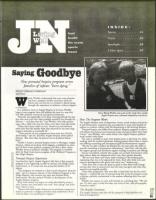
Nurse Wendy Winkler and social worker Leslie Feret outside
Angela Hospice near a fountain donated by a loved one.
How The Program Works
The Angela Hospice team of physicians, nurses, social workers and spiritu-
al and bereavement counselors also are prepared to work with families of
unborn or newborn infants with life-threatening or life-limiting illnesses.
"Prenatal hospice care differs from pediatric hospice programs in that it
will address the physical and emotional needs of parents before their baby
is born," says Winkler, who works closely with Angela Hospice pediatric
social worker Leslie Feret.
The team is available to meet with families prior to the birth of a child,
working with the mother's physician, helping parents know what to expect
and offering counseling and anticipatory grief and bereavement support.
"We also are able to follow the families for two years aftex the death to
provide counseling or bereavement information," says Feret, who has also
led support groups and distributes regular mailings to parents and siblings.
Sumner remember's a family who sought care at Early Intervention when
their unborn baby was diagnosed with a rare, fatal, genetic disorder.
"We met with them over many weeks working on the birthing plan,
explaining what was to be expected for them, their other little ones and
even the grandparents who grieve and worry, too," Sumner says.
"They were able to have the plans in place so that when little George
arrived, they were in control over how the time was spent and what they
wanted to accomplish quickly.
"From their perspective, they were able to hold their son for his entire
lifetime — and his life was 15 minutes long. But it was 15 minutes to last
a lifetime, perfectly orchestrated in the manner reflecting their lives and
beliefs."
Winkler also expects to work with families on a birthing plan. "We will
ask: 'Do they want to hold the baby, save locks of hair, take photographs,
footprints made?"'
The Benefit Continues
%TN
The Angela Hospice team also will be prepared to help families with
funeral arrangements.
7/27
2001
81