

Kahn/Ruben
At U-M Museum — 70
Tony Awards
Preview
f
75
fi
Don
Oak
177lisle
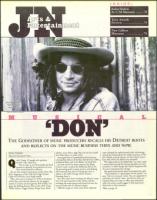
Photo by Caroline Greyshock
THE GODFATHER OF MUSIC PRODUCERS RECALLS HIS DETROIT ROOTS
AND REFLECTS ON THE MUSIC BUSINESS THEN AND NOW.
DON COHEN
Special to the Jewish News
Q
uick. Name 10 people who produce
records. OK, name five.
Not so easy, is it? Most people are hard
pressed to identify the producers of even
their most listened-to albums.
But in that mostly anonymous world, Don Was
(Don Fagenson of the Oak Park High School
Class of 1970) has a very high profile.
-Was, who won a Grammy in 1994 as Producer
of the Year, has helmed albums for the biggest
names in various musical genres: Bob Dylan, k.d.
lang, the Rolling Stones, Elton John, B.B. King,
Willie Nelson, Ziggy Marley, Ringo Starr, Bette
Midler, Anita Baker, Iggy Pop and the late Israeli
diva Ofra Haza, to name a few.
Among the hits he's produced are the Grammy-
winning Best Album of the Year Nick Of Time (1989),
by Bonnie Raitt, and "Love Shack," by the B-52's.
Just last month his latest venture, the Black
Crowes' Lions, cracked the Billboard 200 at No.
20, garnering good to great reviews, and kicking
off a national tour that will bring the rock 'n'
rollers to the DTE Energy Music Theatre,
Saturday, June 2.
But Was hasn't been tracking the album's recep-
tion. He stays focused on the artistic side by
avoiding the trade papers and record reviews for
several weeks after an album's release.
Half the songs on Lions come from rehearsal
tapes salvaged by sophisticated audio technology,
and all are enhanced by the stellar acoustics of the
old Yiddish musical theater on New York's Lower
East Side where the album was recorded.
Was takes pride in his belief that "no one's made
a record that sounds like [Lions] possibly ever,. but
certainly it evokes things that haven's happened for
25 years. Impressionistic things."
He speaks passionately about his production style.
"The producer is a participant in the studio," he
says, "but it is not your vision. You are supposed to
assimilate the artist's vision. And if you have any
original ideas you want to offer, they should be
what the artists would suggest if they had some
objectivity at that moment.
WAS on page 74