

, . , , , . . . . . .
ijoritt.- 01):As4
ArThe Mov
Pollock And Krasner
Bonstelie Players
Co "Cuckoo"
OBE
T
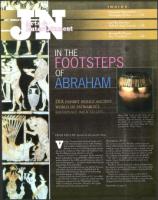
Above: Gold Vessel in the Form of an
Ostrich . Egg: Gold, lapis lazuli, red-
limestone, .shell and bitumen. In antiquit
the ostrich was venerated Jr its swiftness
and strength. Left: Detail from the Great
Lyre from the "king's Gnwe.."
FRAN HELLER Special to the Jewish News
isiting "Treasures from the Royal Torribs of Ur" .
at. the Detroit _Institute of.Arts is like boarding a
time machine traveling back to the dawn of civ-
ilizatiOn. It was at Ur, a thriVing ancient metrop-
olis near the confluence of the Tigris and Euphrates rivers,
that the biblical patriarch Abraham was born.
Between 1924 and 1937, excavations led by renowned
British archaeologist Leonard Woolley yielded a trove, of
artifacts linked to the 4,000-year-old Sumerian culture of
ancient Mesopotamia . located in modern-day Iraq and
parts of Iran, Syria and Turkey: .
The cache was divided between the British Museum
of London, the Iraq Museum in Baghdad and the
University of Pennsylvania Museum of Archaeology
and Anthropology in Philadelphia.
"Treasures from the Royal Tombs of Ur," on exhibit
at the DIA Feb. 25-May 6, is part of a major traveling
exhibition organized by the Philadelphia museum
while it undergoes renovation. Detroit is the eighth
and final stop of the nationwide tour.
V
Excavations At th.--
The . Ur site excavated bvWoolley and his team con-
tained 1,800 buriills, .16 of which were classified as royal
tombs by virtue of the.Wealth of objects found at the site
as Well as evidence of the burials of servants along \vith
the royal. remains. The king and queen's subjects would
have willingly followed'their rulers into the afterlife.
The objects on display come from two of these
tombs: Queen Puabi's :tomb and the tomb of an
unknown king. -
Woolley's interest in ancient culture stemmed from
his original training as- a theologian. The archaeologist
believed that he would find evidence that would link
Abraham to Ur.
Despite his enormous success, rivaled only by
Howard Carter's discovery of the intact tomb of the
boy Pharaoh, Tutankhanien; Woolley was profoundly
disappointed when he failed to find that link.