

colorhealinghome
IMPROVE YOUR WELL-BEING AND YOUR HOME USING COLOR THERAPY
F
eeling blue? In the pink?
Green with envy? Colors
are so often associated
with feelings. And for
good reason. The color wheel
relates to the sacred chakras —
points in our bodies that possess a
certain color. These points dictate
our moods, physical well-being
and mental capacities.
Catherine Cumming helps us
create an atmosphere sympathetic
to our needs in her book, Color
Healing Home (Sterling Publishing
Co., $14.95). The interior design
guide walks the reader through
choosing appropriate colors for
every room in the house. Violet,
for example, is a soothing hue,
perfect for the bedroom of stressed
couples. Red is a sign of energy —
ideal for a room in which you
entertain. In the kitchen, yellow
and orange act as sources of sun-
shine and vigor.
Cumming is an interior designer
and firm believer in the virtues of
decorative healing.
— Linda Bachrack
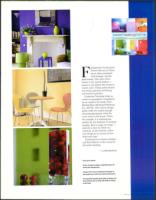
From top to bottom:
A haze of purple produces a dignified space for
retreat and introspection.
Orange is the color of enthusiasm and gusto. It
gets people up on their feet, dancing, having fun.
This powerful emerald green helps to balance the
flow of blood and can help with matters relating
to the heart.
STYLE A