

Itx,-,„ vt
commitment to social and eco-
nomic justice as well as a warm,
heimish place for Jewish learning
and living.
The Workmen's Circle/Arbeter
Ring, celebrating its 100th
anniversary nationally, is looking
forward to its second century.
But the organization began with
very different needs and goals:
The Immigrants
On April 4, 1892, a handful of
Jews gathered in the Essex Street
flat of cloak-maker Sam
Greenberg and formed the
Workingman's Circle Society of
New York. They were part of the
tide of Jewish immigrants fleeing
the persecution and pogroms of
Eastern Europe, hoping to find a
paradise here in America, the
Golden Land. But instead they
found overcrowded tenements,
exploitative sweatshops, discrimi-
nation and poverty.
The Society was loosely based
on the landsmanshaftn — the
small social societies formed for
mutual benefit by newcomers
from the same town or district in
the old country.
But as Dustin Wax tells us in
his history of the origins of the
Workmen's Circle, Brother,
Friend, Comrade, these Jews were
not united around a common
hometown. What they shared was
2/2
2001
82
politics — a radicalism that alien-
ated them from their countrymen
and gentiles alike.
According to Wax, as free
thinkers and atheists, they were
excluded from Jewish cemeteries,
charities and gatherings. So they
came together to provide unem-
ployment relief, a graveyard plot,
financial aid in case of sickness,
life insurance and opportunities
for education — simple necessi-
ties desperately needed by poor
immigrant people.
In 1900, with three branches
and almost a thousand members,
it was decided to reorganize as a
national order, and the
Workmen's Circle (der Arbeter
Ring in Yiddish) was formed. In
its first quarter century, its mem-
bership swelled to 80,000, with
branches across the U.S. and
Canada.
OVer the years the Workmen's
Circle evolved and changed with
the times while remaining true to
its original goals — providing
mutual aid for its members,
fighting for social and economic
justice and encouraging and pre-
serving the heritage of Yiddish .
culture.
In its heyday in the 1920s and
'30s it operated Yiddish secular
schools, sponsored lectures and
concerts, promoted Yiddish the-
ater, literature, music, dance and
art and published books by lead-
ing Yiddish writers.
And it was secular groups like
the Workmen's Circle that made
up the largest element of the
Zionist movement fighting for
the establishment of a Jewish
homeland. In more recent times,
members of secular groups like
the Workmen's Circle could be
found on the front lines in battles
over civil rights, busing, welfare
and poverty programs, and the
Vietnam war.
Today, the organization claims
20,000 members nationwide,
with about 100 branches. Its
national headquarters, including
a Yiddish book center, is on East
33rd Street in New York City. In
upstate New York, it operates the
popular Camp Kinder Ring and
Circle Lodge, a gathering place
for summer cultural events.
Activism In Detroit
As the Workmen's Circle was
growing in size and influence
nationally, it was also making an
impact in Detroit.
The first branch opened here
in 1907. Early on, a shule
(school) was offering studies in
Yiddish culture and language five
afternoons a week. The
\Workmen's Circle Cemetery,
CONNECTION on page 84
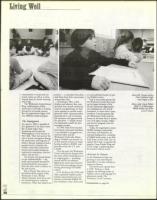
Above left: Drama teacher
Fran Goldstein (right
rear) begins a class.
Above right: Jenny Pollack
(left), 8, ofHuntin on
Woods attends one o her
Level II classes.