

•
\ •;a 4.'
1*,
k4V-010'
;1 ,
• •
A',; •
.
•
DAVID SACHS
Staff Writer
he Cass Corridor, just north of downtown Detroit, is the
forsaken sort of place that the late folksinger Phil Ochs
had in mind with his early-1960s lyrics, "There, but for
fortune, go you or I."
But there are those who have forsaken fortune for social action.
Professional people, for example, committing a few hours a week or
perhaps every working moment — trying to salvage the ship-
wrecked lives that have landed at the Harbor Light Center at Park
and Sproat. The Salvation Army-run facility is the largest residen-
tial rehabilitation program for substance abuse in the state.
Harbor Light is unique from any similar facility in the country
in one respect. With an experimental legal aid clinic on site, it
offers a holistic approach to recovery, addressing not only the
clients' addictive and spiritual concerns but their legal problems as
well.
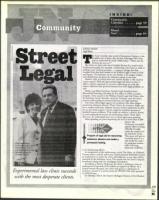
Robert and Ellen Dickman, Temple Israel members from
Bloomfield Township, founded the law office in 1994 as a pilot
program. They named it the William Booth Legal Aid Clinic, after
the Salvation Army's founder. Attorney Dickman runs the clinic,
with his wife serving as executive director and legal assistant.
The clinic offers legal support for problems that often plague
recovering substance abusers. These clients, for instance, might not
be in contact with their children because of their addictions or fail-
ure to pay child support. Clients might be homeless because of
landlord-tenant problems. They might be without a driver's license
to seek employment because of outstanding tickets. More often
then not, the individuals have two or three legal issues pending.
After spending six years improving the lives of more than 4,000
clients, the
u
Dickmans
successful
ti$ .
n
upstart office is being
A
officially brought
auticam ti..
under the auspices of
. s- a a , ' '-f
the Salvation Army.
Program of legal aid for recovering This move will give it
increased stature as a
substance abusers now seeks a
role model for recov-
permanent footing.
ery programs nation-
wide and bring
enhanced credibility
to its fundraising efforts.
In recognition of this achievement, actor Tim Allen, an Oakland
County native, and his wife Laura Deibel donated $250,000 toward
an endowment to make the clinic self-sufficient, a sum that will be
matched by the Salvation Army. The couple was the clinic's original
benefactor, along with the Mardigian Foundation.
According to Robert Dickman, the clinic is seeking to raise an
endowment of upwards of $3 million to support its efforts. As a
kickoff toward that goal, the clinic will sponsor a fundraiser in
mid-June, hosted in a private home by WOMC-FM radio personal-
ity Dick Purtan.
On Monday, May 8, the Eastern Michigan Division of the Salvation
k
-
.
Experimental law clinic succeeds
with the most desperate clients.
rn,"90; ,i00k"
k-..kAl ekk ,
tiN
5/5
2000
41