
2.
Question of the Week:
Can you name the -win brothers who wrote many of the lead-
ing screenplays of the 1940s?
puo oDuonosop 'a.307
pio puo 311_183_1V :GJGAA ipaloJocioiloo AGui HD! um uo JO 'sanies
-way supTsd] a ft Aci uaom JeHT!e sidps eul 6uowv
>I-1°A MGN u! 606 L Li! woci /upiscl] clipud puo snrr alGM Raul
110UU.10 04 GUJD3 o yM LIOW etu
LIOAASUlf
•
•
'
k
f‘ks •
4.&
U
\s,
Elizabeth Applebaum
AppleTree Editor
L
ike every major Jewish holy
day, Yom Kippur, which
begins this year on Sunday
evening, Sept. 19, has its ori-
gins in the Torah.
In Parshat Acharei Mot (Leviti-
cus 16:29-34), God commands
the Jewish people to observe the
10th day of the seventh month
as a time of complete rest (Shab-
bat Shabaton) and to "afflict"
themselves. The high priest in the
Temple at Jerusalem shall perform
a service that will provide atone-
ment for all the sins of the Jews.
mwsEN
<
RR:Neff
<s5 Pz.
.ra
a 4
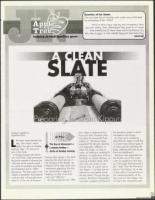
The Day of Atonement
a solemn holiday
starts on Sunday evening.
Various other places in the Torah
describe the actual service. In
the absence of the Temple, we
observe all the other Torah com-
mandments regarding Yom Kip-
pur, particularly in regard to
keeping it a day of rest from
work and "affliction."
The Talmud teaches that "afflic-
tion" refers to abstinence from
food and drink. Rambam (Mai-
monides), the renowned Torah
scholar of 12th-century Spain,
expanded the talmudic teaching
and interpreted "affliction" to
mean five things: no food or
water, no bathing or washing for
pleasure, no application of oil to
the body, no marital relations, no
wearing of leather shoes. (Chil-
dren who are not bar or bat
mitzvah may, of course, eat on
Yom Kippur — but they are not
allowed to wear leather shoes
this day either.) Through the gen-
erations, Rambarn's interpretation
has been accepted and become
the standard manner in which
we observe Yom Kippur.
(In case you're wondering
about that oil, keep in mind that
in ancient times various types of
oil were used for cleansing the
body, softening skin and as per-
fume and deodorant.)
Rambam also expanded on
the Torah's use of the word
"rest" as applied to Yom Kip-
pur. He taught that because a
Jew "rests" from the five activi-
ties on Yom Kippur, he or she
is then able to concentrate on
the intense spirituality of the
day and turn Yom Kippur into
an event that transcends ordi-
9/17
1999
Detroit Jewish News
109
Scanned image of the page. Keyboard directions: use + to zoom in, - to zoom out, arrow keys to pan inside the viewer.
September 17, 1999 - Image 109
- Resource type:
- Text
- Publication:
- The Detroit Jewish News, 1999-09-17
Disclaimer: Computer generated plain text may have errors. Read more about this.