

By Jill Davidson Sklar
I
n a cabin on the waterfront of
Copper Harbor, Susan Burack is busy
cobbling together a tiny network of
volunteers to keep their aging
congregation, Temple Jacob, going.
The Hancock-Houghton area of the
Upper Peninsula is hundreds of miles
from Detroit and seemingly a world
away, but the fixtures of the Jewish
community, like those in the big city,
still have to be maintained. There is a
cemetery to keep up, a small building
to service, grounds to tend,
flowers to plant, High Holiday
plans to be made, Adat Jacob
Food Club orders to collate,
bimonthly Torah study and
potluck dinners to organize.
At other times during the
year, the group of 15 families
who make up the Jewish
community in this former
mining town also plan
Chanuka and Purim parties as
well as Tu b'Shevat gatherings.
But for Burack, this late
spring morning is spent trying
to organize a farewell party for
the recent Jewish graduates of
Technological
Michigan
University. As president of the 116-year-
old Temple Jacob, she is busy tracking
down seniors before they leave, sending
invitations, ordering hot dogs and
preparing for the giant bonfire that is
the centerpiece of the party.
"Everybody gets to do something. I
do everything else," she says, laughing.
It takes a lot time and I love it."
In small communities that dot the
Michigan coastline or inhabit the
wilderness regions of the state, Jews
band together to contribute their time
simply to have aspects of Jewish life city
dwellers often take for granted:
synagogues, Sunday schools, kosher
food, a sense of community. Their
commitment to volunteering goes
beyond what is seen in larger
JNSourceBook
low of about 50 families. The annual
dues structure at Temple B'nai Israel
is less than half the Detroit average of
$1,200. Along with two other temples
in Bay City and Midland, the area Jews
banded together to form Am Yachad,
a religious community that pools its
money to pay the salary of a shared
clergyman, Rabbi Robert M. Scott.
After his salary, there isn't much left
in the coffers to pay for upkeep of the
temple property or for
programming. That's why Barbara
Steinmetz donates her time and
talent to organize the weekly
Oneg Shabbat, featuring
homemade baked goods and
coffee donated by a rotating list
of members. Under the tutelage
of congregation president Naomi
Primack, Steinmetz oversees a
smaller and smaller number of
volunteers in this shrinking
community.
lliose of us who are left are
picking up the work that was
once spread among a large
I number of people," Steinmetz
2‘ says. nliose who have remained
) really care about the community.
We came here to a wonderful
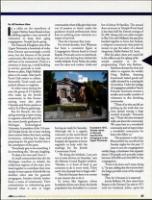
herring are ready for Saturday. Founded in 1912, community and we hope to leave
a wonderful community for
Although she is a regular Temple Jacob
in Hancock
those who follow us.
volunteer at the areas blood was the first
This sentiment is why Gary
center and gives time at the synagogue in the
hospital, she squeezes in hours Upper Peninsula. Blumenfeld has sacrificed his
Sunday nights for the past 15
regularly to help with the
years to run the congregation's
mailings for the Jewish
weekly bingo, a fundraiser that regularly
Community Fund.
draws 150 people and annually makes
"By doing the kiddush, I am sure
between $20,000 and $44,000 for the
not to miss services on Saturday," says
congregation.
the lifetime Grand Rapids resident.
"It has to be done and I enjoy doing
"Besides, it is kind of hard to get
it," he says, adding that the income from
someone to do it every week. There
the bingo provides most of the temple's
aren't a lot of people here to begin with."
budget.
They do it because there is no money
They do it because it is expected.
to pay anyone else to do it.
Jennie Belfour, 94, first came from
In towns like Saginaw, where
Boston to the Traverse City area in 1971
hundreds of Jews once lived, the Jewish
with her husband, Julius, upon his
population has dwindled to a current
communities where folks give their time
out of passion or desire under the
guidance of paid professionals; these
Jews in outlying areas volunteer as a
matter of survival.
They do it because they must.
For several decades, Ann Wepman
has been a consistent figure at
Congregation Ahavas Israel in Grand
Rapids. Previously active in sisterhood,
she now is the driving force behind the
weekly kiddush. Every Friday, she makes
sure the cakes and cookies, challa and
29