

I lived through this story as a little
boy. Now, with the opening of eastern
Europe to the west, the last living
actors in that incredible drama have
granted me interviews on the topic,
enabling the pieces of this dramatic
story to be woven together.
Territory's Price
At the beginning of World War II,
50,000 Jews called Bulgaria home. Two
decades earlier, at the end of World War
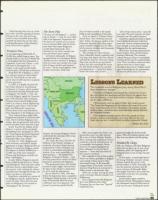
I, the kingdom had lost Macedonia to
Yugoslavia, in the west; Thrace — and
the access to the Aegean Sea — to
Greece, in the south; and the fertile
northern plain of Dobrudja to Romania.
King Boris III of Bulgaria, a clever
but insecure monarch, had realized
that the Third Reich was the only
power that would help him recuperate
his lost provinces.
In 1940, as a display of good will,
the Fiihrer hosted an international
conference in Vienna, which resulted
in Romania's handing Dobrudja back
to Bulgaria. On March 1, 1941, the
very day Bulgaria signed the Tripartite
pact with Germany, Italy and Japan,
German forces entered Bulgaria and
used it as a base to attack neighboring
Yugoslavia and Greece. A few weeks
later, the Wehrmacht turned over
Thrace from Greece and Macedonia
from Yugoslavia to the Bulgarian army.
Thus, without firing a single bullet,
Bulgaria had achieved its territorial ambi-
tions. The 6.5 million Bulgarians were
ecstatic. But the government had sold its
soul to the devil, and it was time to pay.
So the "Law for the Defense of the
Nation," a version of the anti-Jewish
Nuremberg Laws, was passed. In 1942,
the "Commissariat for Jewish Questions,"
headed by a fanatic Bulgarian Nazi,
Alexander Belev, was created.
On Feb. 22, 1943, Bulgaria and
Nazi Germany concluded a unique
agreement to deport Bulgarian Jews to
Poland. It stated that Bulgaria would
first deport to Poland 20,000 Jews —
12,000 out of the new territories
Thrace and Macedonia, and the rest
from "old Bulgaria."
In early March, Bulgarian security
forces raided Jewish homes in Thrace
and Macedonia. Their zeal and cruelty
will leave forever a dark shadow over
the country. And, echoing the advanc-
ing Holocaust throughout Europe, not
much was done to stop them.
King Boris, implored by a prince of
the Bulgarian church, replied that he
could not help. These Jews, he said,
were not Bulgarians, but viewed as
"belonging to the Germans."
The Secret Plan
The Jews of "old Bulgaria" — includ-
ing my family — were the next sched-
uled to be deported. Preparations for
this had to be carried out in utmost
secrecy, because Belev and his hench-
men knew that many Bulgarians
would object ferociously. Anti-
Semitism in my native country was
rare and almost never violent.
Germany's ambassador to Bulgaria
recognized this in a message to Berlin.
"Besides the few rich Jews in Bulgaria,
there are many poor people who make
their living as workers and artisans,"
he wrote. "Partly raised together with
Greeks, Armenians, Turks and
four of whom traveled to the capital
Sofia to seek cancellation of the order.
Early on March 9, Dimiter Peshev
heard them. The revelations stunned
him. Peshev, the deputy speaker of the
National Assembly, and other parlia-
ment members barged into the office
of the interior minister and threatened
a public confrontation.
The strongly pro-Nazi minister,
Peter Gabrovski, hastily conferred with
the king, who despite the Nazi alliance
still had the final say. Until now, King
Boris had carried out an anti-Jewish
policy, but this news jolted his senses.
At that fateful moment, he canceled
the deportation — barely four hours
before the trains were to leave.
"Jews always remain Jews," came the
curt reply. The only response, the Nazi
declared, was "the radical solution."
King Boris vaguely promised to deport
"some Bolshevik elements" (which he
never did). And he somehow found the
inner strength to stress that he needed
Bulgaria's Jews for road construction.
Back home, the king summoned the
prime minister, Filov, and the interior
minister, Gabrovski. The monarch
ordered these pro-Nazis to immediately
mobilize Jewish men for roadwork labor
units. Thus, my father, uncles and other
relatives were sent to these camps
throughout the country. Despite several
cases of cruel behavior by commanders,
life was not all that hard. The men
lEinikEx ED
. _
The remarkable rescue of Bulgarian Jewry during World War II
bears three distinct messages:
• The Jews of Bulgaria were rescued by a motley crew of peo-
ple, who risked their positions and their lives to act against their
own best interests, to save their Jewish co-citizens. Ordinary peo-
ple do make a difference.
• When people stood up against Hitler, they could succeed.
The Danes, the Bulgarians and the Italians (for most of the war)
saved many thousands of lives. Hundreds of thousands, perhaps
millions more, could have been saved had other nations followed
the Bulgarian example.
,
• The Bulgarian example proves that when people are deter-
mined to stop an evil enterprise, even when they are few and
weak, they can win. A weak David can defeat a powerful Goliath.
Michael Bar-Zahar
Gypsies, the average Bulgarian doesn't
understand the meaning of the strug-
gle against the Jews."
As a result, the racist "Law for the
Defense of the Nation" brought an
avalanche of protests from everyone
ranging from unions of lawyers and
writers, to shoemakers and railroad
workers. Even more powerfully, the
Metropolitans — the heads of the
Bulgarian Orthodox Church — had
sent the government streams of object-
ing letters, petitions and telegrams.
The government knew that further
measures might trigger more protests.
So deep secrecy became a characteris-
tic of its work for deportation.
But on March 4, 1943, a few days
before the deportation date, a sympathet-
ic Bulgarian leaked the plan in the small
town of Kyustendil; all of the town's
1,000 Jews were to be deported. They
turned to prominent gentile friends,
Belev was enraged, but Peshev sus-
pected the action was only delayed.
He wrote to Prime Minister Bogdan
Filov, warning that such future actions
would be immoral and inhumane. In
a remarkable development, Peshev
received 43 supporting signatures
from colleagues in the pro-fascist
majority — more than one-third of
the majority members.
Filov exploded in fury at this incident,
which was without precedent in Bulgaria
and certainly without equal in Nazi-
dominated Europe. So he personally
stripped Peshev of his duties. And a few
days later King Boris was summoned to
Hitler's retreat in the Bavarian Alps.
Hitler was cordial, leaving the dirty
work to Foreign Minister Joachim von
Ribbentrop.
Boris explained that the Bulgarian
Jews wereclifferent from other
European Jews as they were "Spanish"
(Sephardi) Jews.
gained furloughs; the food was ade-
quate. When the weather became cold
they were sent home until the spring.
Shielded By Clergy
Still, the Germans and their Bulgarian
allies had not given up. A new, more
ambitious plan, one targeting all of
Bulgaria's Jews in one swoop, was pre-
pared.
At this point, a stunningly beauti-
ful young Christian woman, Liliana
Panitza, leaked the secret to the
Jewish leaders in Sofia. Ironically, she
was the personal secretary and the
secret mistress of Alexander Belev.
She deeply loved him, but could not
stand idle in the face of a pending
monstrous crime.
Jewish leaders again turned to
Christian friends. Metropolitan Stefan,
the charismatic head of Sofia's church,
took up the cause. Defying the prime
4/9
1999
Detroit Jewish News
23