

•TNLiving0
Retirement or
semi-retirement
has its
and some
careful planning
needs to be done
to avoid them.
LISA GAYLE
Special to The Jewish News
ore than most people,
Marjorie Fuller is con-
scious of how precarious
health and life can be,
especially as people age.
For years, she worked for the
Alzheimer's Association and in home-
based hospice care. When her parents
were ill, she cared for both, at the
same time, in her own home. They
died a few months apart.
By the time Fuller was in her early
'50s, her children were grown, college
was paid for, and grandchildren beck-
oned. She decided to make the most
the doors at 7 a.m., coming home late
of the time she had left, be that several
each night. In his mid-50s, he sold the
decades or a few short years.
business and established a new career
Fuller changed gears. Instead of
in mortgages and property manage-
working 60-hour weeks, she estab-
ment, something he had dab-
lished a part-time private prac-
bled in while running the
tice working with dementia
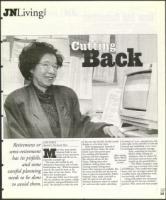
After retiring, bookstore. Now he makes his
patients and their caregivers.
Elaine Weston own hours and can leave early
She still goes all-out for her
has returned to pick up the grandchildren..
clients, helping them solve
to work.
The Fullers accepted a mon-
problems, making home visits,
etary cut to increase their sense
running errands, letting them
of fulfillment. They traded their large
know what resources are available. But
home, nice but no longer needed, for
her hours are flexible and she has the
a smaller home, job satisfaction with-
time to enjoy her personal life. Fuller's
out overwork, and family time.
husband, Arnie, made a job shift as
Going cold-turkey into retirement
well. He used to own the Little
at
around
age 65 was once standard
Professor Bookstore where he worked
practice. Now, more and more people
six- and seven-day weeks, unlocking
12/26
1997
L5 5