

The Technology Tap
Local day schools are looking into federally-mandated computer subsidies
to upgrade their access and add equipment.
JULIE WIENER
Staff Writer
L
•
31543 W. 13 MILE RD.
FARMINGTON HILLS
(248) 553-4867
Mon.-Wed, 10-6, Thur. and Fri. 10-9 sf
Sat 10-6, Sun.12-5
723 liest
bi
rrni
ngh etc`
0.203. 122
maple
.
12/19
1997
26
CLASSIFIEDS
GET
RESULTS!
Call
(2451354-5959
ast month, when a class at
Hillel Day School dissected
frogs, no one had to breathe
in formaldehyde fumes. And
instead of touching a dead amphibian
through gloved hands, the students
simply touched mice — computer
mice, that is, the kind used for point-
ing and clicking.
Teaching frog dissection using an
Internet application is one of many
ways Hillel is integrating computer
technology into the curriculum.
Students also are using computers to
study Hebrew, learn about Israel, con-
duct research projects and, in the next
few months, communicate in Hebrew
with pen pals in Israel and at day
schools throughout North America.
With over 40 computers hooked up
to the Internet, personal e-mail
accounts available for all students in
grades 3 and up, an elaborate website,
two computer resource teachers and a
full-time director of technology, the
712-student Hillel is the leading local
Jewish day school in terms of its com-
puter offerings, and the only one pro-
viding regular Internet access for teach-
ers and students. Enhancing the stu-
dents' comfort with computers is the
fact that 90 percent of them have com-
puters at home, says Jay Greenberg,
Hillel's director of technology.
But with computers becoming
more prevalent and new federally-
mandated technology subsidies soon
to be available for educational institu-
tions, both Akiva Hebrew Day School
and Yeshiva Beth Yehudah are explor-
ing how upgrading their computers
may enhance their curricula.
Starting next month, due to federal
legislation popularly known as the E-
rate Program, local schools will be able
to apply for technology subsidies
administered through the Michigan
Department of Education. Akiva and
Yeshiva Beth Yehudah both plan to
apply, while Hillel and Yeshiva
Gedolah are considering applying.
Detroit's other Jewish day school,
Darchei Torah, did not return phone
calls.
The subsidies will enable schools to
purchase computer equipment, hook
up to the Internet and receive Internet
access at reduced rates. Eligibility —
and the amount of subsidy — will be
determined through a lengthy two-
stage application process, which
includes the submission of detailed
plans describing how the technology
will be used. The size of the subsidy
will vary depending on the average
costs. Furthermore, administrators at
Akiva and Beth Yehudah are not sure
whether the benefits of increased tech-
nology will be worth the costs.
Akiva, which has 296 students,
hopes to utilize the E-rate benefits,
but has not yet developed a technolo-
gy plan, says Principal Rabbi Karmi
Gross. Currently, Akiva has a com-
puter room with 20 old-model com-
puters, as well as a few computers
"Itri:Off
2
a.
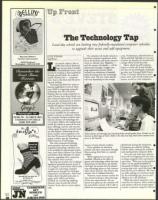
Hillel director of technology Jay Greenberg helps seventh -grader Jason Garden use the
Internet to find maps of Israel. Hillel is the only local day school where students have
access to the Internet.
income of each school's students.
Once subsidies are allocated,
schools will select contractors through
firms posting their bids on a special
website.
While applications are not yet
available, officials at the office of
grants and technology within the state
department of education, say schools
can begin the process now by submit-
ting technology plans to their interme-
diate school districts. (For Detroit day
schools, this is Oakland Schools.)
However, much remains unclear for
day schools looking to take advantage
of the new opportunities. No one
knows how generous the subsidies will
be and whether schools will be able to
afford the accompanying maintenance
distributed among the classrooms. •
Computers are used for drilling
Hebrew skills, creating the yearbook
and teaching basic computer skills.
"As is the case with most schools,
we're still investigating the best ways
to bring computers into curriculum,"
says Gross. "We're not in the position
where we can spend hundreds of
thousands of dollars staying on the
cutting edge with a tool that hasn't •
been proven to be effective. We want
our kids walking out of school ready
for the technology age, but we can't
afford to be at the forefront."
While the school currently is not
wired for the Internet, Akiva students
and teachers will have several oppor-
tunities to practice using the Internet