
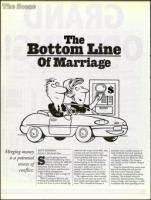

The
Bottom Line
Of Marriage
Merging money
is a potential
source of
conflict.
MATT MOSSMAN
Special to The Jewish News
o you're getting married.
That means planning a hon-
eymoon, visiting the rabbi 26
times and choosing a wed-
ding party. You'll research color
schemes, pick menus and slave over
proper seating arrangements.
But a marriage is also a merger of
sorts — of finances.
When it comes to finances, not
sweating the small stuff can cost you
in the end. Even if you've already fig-
ured out how to get out of debt, into
a house and start saving for your
first-born's freshman year at Harvard,
there's probably still more to do.
"In all the hoopla of getting mar-
ried and going on the honeymoon,
we overlooked changing our tax sta-
tus, and it really cost us a lot of
money," said Allyson Cohen, 27, a
financial consultant with American
Express Nyho married in May 1996.
She explained that when married,
you can file one joint tax return for
both people and claim higher exemp-
tions. This is beneficial because it
translates into a smaller amount of
taxes withheld from each paycheck.
But it also means remembering to
change the form you filled out when
you started working. Not doing so
cost Cohen and her husband Doug at
least $1,200.
Tying the financial knot means more
than just deciding who will pay the
bills each month. Married couples
today discuss everything before doing
anything. This includes saving for
retirement, linking finances, investing,
setting a budget and learning to consid-
er someone else when spending money.