

sion builds up all around us and
doesn't ease until we leave. This
makes me sad, because I had
such a wonderful relationship
with my own grandparents who
were very special to me. I feel
my children are missing out on
this. I know you have some ideas
about what can bridge that dis-
tance gap, to bring my parents
and my children closer together.
Can you give me any advice?"
•
•
.
OOOO
In my book, The Long Distance Grandmother (Hartley & Marks, 1995), I wrote about the hundreds
of ways in which grandparents can build loving relationships with their grandchildren, in spite of the
miles that separate them. Of course, long-distance connections are never going to be as satisfying as
having grandparents and grandchildren living in the same town. Yet, if the separation between fami-
lies is a fact of life, we can do more than just anguish over our fates. There are many things that
grandparents can do that will build and secure loving and
respectful relationships, even if the geography gap is as
wide as a continent. Here are some of the things I did that
worked for me:
•
OO OOOOOO • • • • • • • • • •
ft*
Making connections by telephone. The most
obvious way to develop long-distance relationships
is by telephone. I began making this connection
very early, when my gandboys were young, by
• talking to them as if they were there in person.
I tried to choose a time that was not intrusive
for either my daughter, or for the boys. When they were
toddlers, I kept the conversation moving by asking ques-
tions that were concrete, and not too complicated, always
allowing for them to tell me anything they wished, and
trying to be a good listener. Some simple rules for talking to
grandchildren at any age include: not interrupting, not being
critical or judgmental or accusatory, not prying or invoking guilt.
On occasion, when one of the boys was preoccupied with an ac-
tivity that either prevented him from corning to the
telephone or shortcircuited the conversation, I always
1441
? Alternatives to letters. There are dozens of alternatives to letters
let him make that choice, without hard feelings. Even
that are easily transported and that also bring message of love and car-
though this may be difficult for grandparents to hear,
ing:
Homemade cards, to celebrate special occasions; jokes and riddles,
we "older folks" must respect such choices and appre-
suggestions for science or art projects; gifts such as crayons, dominoes,
ciate that our grandchildren's lives are not organized
0
magnifying
lenses, prisms and puzzles. Grandparents who take pains to
to meet our own needs.
choose little gifts that are right in line with a grandchild's special inter-
The telephone connection has reaped rewards for
ests
will
find
that
even an inexpensive offering can bring pleasure and appreciation.
me. The other evening, when the phone rang, it was
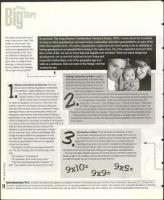
You may even find a delightful response. In my mail one day I received a letter from
Arlo.
Simon,
at age 9: "Hi, Grandma. Did you know that if you multiply nine by enething if
"Hi, Grandma," he announced.
you add the number you get it will add up to nine! You try!!!
"Hi, sweetheart, How lovely of you to call."
"I don't have anything important, Grandma," he
said. "I just wanted to hear the sound of your voice."
THE APPLETREE
1
14
9x9=
9 X5r:
Selma Wassermann, Ph.d., is director of professional programs and professor emerita in the faculty of education at Simon Fraser University in Vancouver B.C., Canada She is
the author of eight books and numerous journal articles, and has been in the teaching profession for more than 45 yeats. The recipient of the university's Excellence in Teaching
Award, Dr. Wassermann lives in Vancouver with her husband, Jack, and cat, Mischa Her daughter, Paula, lives in Nelson, B.C. with her two grandsons, Simon and Arlo.