

''k4aleS0 Viftir
4V,
ater in Russia), then again in 1926 at the
Majestic Theater on Woodward, and in
1930 at Littman's Peoples Theater.
Though Goldfaden is credited with both
the words and music for "Almonds and
Raisins" (and he did, in fact, often compose
all the music for his plays), the piece ac-
tually is an adaptation of a popular folk
song from Russia. In general, the song goes
something like this:
Under Yankele's cradle
A little white goat is standing.
The little goat went off to the market,
To bring raisins and almonds
For my little Yankele.
ognize the beauty and poignancy of the
original folk song. During the Holocaust,
Eastern European Jews had their own
"Raisins and Almonds." But in this ver-
sion there are no dreams of a beautiful fu-
ture. Instead, an old man writes his last
will, pleading with those who survive to
"tell your children of our suffering and
murder."
Night Descends
T he names of the authors of many
lullabies are now lost.
Two of the most popular from
Israel, "Rad Halailah" (Night Descends)
and "Numi, Numi" (Sleep, Sleep) both
speak of a father who has gone, but will
return with a treat.
Rad Halailah
Raisins and almonds,
Night already has come,
A wonderful delight
It has come.
To make my baby healthy.
Where did Daddy go?
To the village.
My Yankele will study Torah,
What will Daddy buy for me?
And write learned volumes
A goat and a kid.
A good and pious man
Who will milk the goat, who?
He will always be.
The both of us, my son.
Numi, Numi
Goldfaden's version of "Raisins and Al-
monds" also tells of "a widowed daugh-
ter of Zion" who rocks her only child,
Yidele, to sleep. She sings of the day when
her boy will go to market and trade in
raisins and almonds, and of when he will
be a wealthy man. "But even when you are
rich, Yidele," she implores, "remember
your mother's lullaby."
Goldfaden was not the only one to rec-
Sleep, sleep, my child.
Sleep, sleep, my little one.
Father has gone to work,
he has gone.
He will return when the moon is out,
He will bring you a present.
gan writing in Yiddish and left newspa-
pers for fiction. His first short story was
published in the St. Petersburg weekly
Dos Yidish Folksblat, where Sholom Ra-
binovitz began writing under the name
Sholom Aleichem.
Sholom settled in Kiev, and his first nov-
el, Natasha, was published in 1884. He
founded a Yiddish journal, Di Yidish Fols-
biliotek, to which many of the new and
leading authors contributed.
Sholom Aleichem's most famous char-
acter, Tevye the Milkman (the central fig-
ure in Fiddler on the
Roof), made his first ap-
Left: Sholom
pearance in 1894, an
Aleichem's poem
otherwise difficult
speaks of life in
decade for the author.
America.
Sholom was both a pro-
Below: Mordechai
lific and popular writer
Gebirtig warned of but a poor business-
a terrible fire.
man, and he would be
plagued throughout
Sleep, My Child
much of his life by fi-
holom Aleichem is
nancial woes.
better known for his
Throughout the ear-
words of wit than his
ly 1900s, Sholom be-
tender poems. But he was in-
came active in the
deed the author of "Sleep, My
Zionist movement and
Child," one of the most well-
wrote almost nonstop.
known Jewish lullabies.
He gave frequent read-
First published in 1892,
ings and traveled to
"Sleep, My Child" is a poem
New York and Europe.
of hope for what lies ahead in
He wrote plays, but few
America.
were successful abroad,
Sholom Aleichem was
where he had hoped to
born Sholom Rabinowitz in
earn much-needed in-
1859 in Pereyaslav, Ukraine.
come.
He was a boy when his par-
In 1913 Sholom be-
ents settled in Voronkov, the
gan what would be his
model for the town of "Kas- YIVO INSTITUTE OF J EWISH RESEARCH
last major opus, an au-
rilevke" in many of his stories.
tobiographical novel called From the Fair.
Sholom Aleichem was in his early 20s
He did not live to finish it. Ill for many
when his first work, a short newspaper ar- years (he was diagnosed with tuberculo-
ticle, was published. He continued in jour- sis just before his 50th birthday), he con-
nalism for three years, writing in Hebrew. tinued to lecture throughout the world
The stories often focused on Jewish edu- in an effort to secure funds. He had just
cation.
begun one such tour when he died May
After Sholom married in 1883, he be- 13, 1916.
eS
• 0 •
The first version wasn't bad, but Ilene
Safyan wasn't satisfied.
She and her partner, Margie
Rosenthal, had just completed record-
ing Cantor Robbie Solomon's "Wings
of Love" for their collection of Jew-
ish lullabies, Where Dreams Are Born.
Everyone was happy, and Mrs.
Safyan agreed the recording sound-
ed nice. But nice wouldn't do for what
Mrs. Safyan described as "the most
incredibly tender song, representing
a parent's hopes and dreams for her
children."
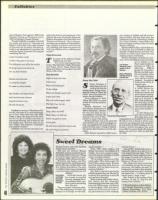
Ilene Safyan
At the last minute, the
and Margie two women re-recorded
Rosenthal:
the song, changing the in-
Speaking in strumentation from a gui-
melodies.
tar to a piano and slowing
down the pace.
The new version "was more reflec-
tive," Mrs. Safyan says. "It wasn't just
singing; it's as though we were talk-
"
ing m melodies."
Since '1987, .Ilene"Safyan and
Margie Rosenthal, both residents of
Oregon, havabeen singing a reperz -
toire that features all kinds ofJewish
music, including lullabies.
"We do lullaby concerts on a Sat-
urday night," Mrs. Safyan said. "It's
kind of like a pajama party. We have
some fun songs, then settle down on
blankets, turn the lights down low,
and sing lullabies."
Mrs. Safyan said she loves Jewish
lullabies because they are 'like the lit-
tle kernel that started us in early life
and carried us through."
Before making their lullaby album,
Mrs. Safyan and Mrs. Rosenthal
looked through book after book of He-
brew and Yiddish songs, and listened
to old recordings. "Once you start to
search you find music you never re-
ally paid attention to that suddenly
. scream
Among Mrs. Safyan's fa.vorites: a
Sephardic tillaby on a record by Is-
. raeli. sinder Yehoram Gaon; "Talit," a
contemporary Israeli song which gives
the image of a parent who, like an ea-
gle, protects her child; and Cantor
Solomon's 'Wings of Love."
Mrs. Safyan at times writes her
own lullabies, though she has yet to
record any. She begins, she said, "by
looking into my heart, then translat-
ing that feeling into words." Anything
can inspire her — "a wish for snow, a
certain event, a hope, a fear."
Mrs. Safyan is the mother of two
children, 12 and 10, "and I'm still
singing them lullabies."
"
❑
On For information on Ilene Safyan
and Margie Rosenthal, contact
Sheera Recordings, P.O. Box
19414, Portland, Ore., 97219.