

MICHAEL DAVIS EXECUTIVE EDITOR
DETR OI T JEWISH NE WS
PHOTOGRAPHS BY ZION OZERI
ebbie Fried-
man is in New
York, bounc-
ing around her
spacious West
Side apart-
ment-studio in
jeans and a periwin-
kle-blue thermal sweater, a portable
phone cradled between her shoulder and
chin. Her manager is on the line with
news. A block of partially subsidized tick-
ets has been set aside for those who can't
afford the full $25-$50 price for her
Carnegie Hall debut in four days.
"Great!" she says, pumping her fist. No
one will be turned away from the storied
concert hall for lack of cash, just as a
struggling soul would not be turned away
from a shul at Rosh Hashanah.
As she speaks, friends, family and fans
from across the continent are descending
on Manhattan in anticipation of the Jan.
7 concert.
Coming, too, are rabbis, cantors, Jew-
ish educators and camp coordinators, the
people for whom she has written through
the years, the people who matter most to
the 44-year-old composer-performer and
recent California transplant.
Ms. Friedman is said to be the nation's
most popular and successful composer
and performer of contemporary Jewish
music, based on healthy sales of her 13
recordings and the sheer pervasiveness
of her liturgical compositions.
Her music fuses the centuries-old tech-
niques and stylings of American folk mu-
sic with sacred lines of traditional Hebrew
prayer, passed down through the millen-
nia. While liberal Judaism has responded
to it warmly, it has left some traditional-
ists cold for its departure from the canon
of Eastern European liturgical music. But,
love it or not, Ms. Friedman's star is as-
cending as she hits New York, ground zero
of North American Jewish life. Next stop,
Carnegie Hall, where her new manager,
Moshe Rosenfeld, has arranged a coming-
out party for Ms. Friedman after 27 years
in the trenches of Jewish communal life.
The Wisdom And Wonder
As a preschool child in Utica, N.Y., Ms.
LU
1--
30
Michael Davis is editor of our sister
publication, the Baltimore Jewish Times.
Susan Josephs, a reporter for New York
Jewish Week, contributed to this story.
led an inner voice to convince
Debbie Friedman's
Friedman learned the wisdom
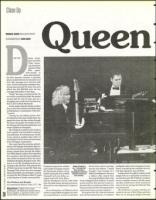
Jan. 7 Carnegie Hall
her she was inferior. "I really
and wonder of Judaism around
debut included a
the farmhouse kitchen of her retrospective of spiritual thought I was running on a
bubbie and zayde, Eva and Bill melodies written over deficit of intelligence," she says,
three decades.
a refrain often heard from
Chernoff. At 5, her father ac-
learning-disabled adults who
cepted work in St. Paul, Minn.,
and the Friedmans moved 1,000 miles went undiagnosed as children. It would
from the table where oatmeal and uncon- not be until her 30s that she would un-
ditional love were dispensed in large por- derstand that a tracking problem in the
brain prevents her from arranging letters
tions.
As an elementary and Hebrew school and musical notes in proper sequence.
Throughout her life, what she learned
student, young Debbie struggled with read-
ing comprehension, In time, frustration best, she has learned by ear. A computer
synthesizer allows her to compose on a key-
board, translating her melodies into cor-
rect time signature, key and form.
In high school, her gift for melody would
merge with her unshakable connection to
an ancestral past. Ms. Friedman would set
out on a singular course in Jewish music,
one that would borrow from musical id-
ioms in the air during the Vietnam War
era and beyond.
Ms. Friedman's acoustic melodies are
rooted in the era of Bob Dylan and Joan
Baez. At 17, during the height of the late