

he tables and counters
didn't shine quite as
brightly and the patrons
were a tad scruffier.
JULIE EDGAR
And while the coffee-
STAFF WRITER
houses of the 1950s and
1960s offered one or two
fancy coffees, most of the
time it was the ordinary
stuff, unembellished by
foam or cinnamon.
One of the only ra itions modern coffeehouses
have maintained is open-mike night, where intre-
pid troubadours or poets stand up and do their thing.
CD
Di
e a 11 cn
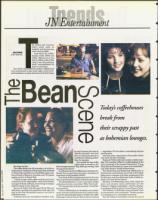
Today's coffeehouses
break from
their scrappy past
cDs
C.fa
LLJ
C/a
LL,
F-
CC
LLJ
Ca
LI-1
F—
But they are few.
The coffee drinks are rich nowadays, as is the en-
tertainment: Customers will find jazz trios at Brazil
in Royal Oak and Bravo! in Southfield, dance par-
ties at South of Brazil in Ferndale and CD release
parties at Java in Royal Oak.
"I think an open-mike night would be nice, but it
would have to be respectable," said Justin Smith,
manager of South of Brazil, which brings in deejays
and live bands on the weekends.
Barnes & Noble Cafe Manager Kevin Skinner
said poets, novelists and musicians read, sign and
play at the West Bloomfield location, but only at
scheduled times.
A free-for-all at the microphone wouldn't work,
he said, because the store is
"family-oriented" and isn't
keen on taking the chance on
a performer uttering profan-
ities, for example.
Java ended its open-mike
nights after it moved to a dif-
ferent location because "they didn't go over big," said
manager Paul Sarris.
An informal survey of coffeehouse customers con-
firmed that an open forum for poets, comedians or
musicians would probably fall flat.
Two South of Brazil regulars grimaced at the very
idea of spontaneous displays of artistic expression.
"It's good people have a way to vent their artistic
endeavors, but not on my time," Mike Prout said.
"It's characteristic of cheesy karaoke," Frank Bai-
ley remarked.
Today's coffeehouses are decidedly more whole-
some, more like alcohol-free bars than dimly-lit hide-
aways for alienated philosophers. Neither the Coffee
Exchange in Royal Oak nor Bravo! allows smoking
as bohemian lounges.
— anywhere. For the others, nonsmoking sections
are the norm.
And they draw organizations that prefer clatter
over quiet for their meetings.
Barnes & Noble Cafe hosts weekly scrabble meet-
ings. The Lonestar Coffee Co. in Birmingham is the
site of meetings of the Jewish Federation's Young
Adult Division because it's "open and comfortable,"
said YAD director Jenifer Rosenwasser.
The Shadowbox and Planet Ant coffeehouses in
Hamtramck and Gotham City Cafe in Ferndale
have more in common with their predecessors like
the Tantrum and Cup of Socrates, both of which ex-
isted in the late '50s in Detroit.
Monday and Wednesday open-mike nights for
poets and acoustic music performers are the
Gotham's "biggest weeknights," said Tina Farley,
an employee and the sister of owner Shawn Farley.
The Gotham "is definitely more laid-back" than
its counterparts, she commented. "People compare
it to hanging out in somebody's basement."
But the Gotham most likely won't go the way of