
Rae Back to B13YO!
BOSNIA, AGAIN page 109
1980's Reunion
RNS/REU TERS
Tote et tie 80'4!
Dessert Reception
Saturday, September 9, 1995
8:30 pm
First Center Office Plaza
26957 Northwestern Highway
Southfield, MI
Couvert: $15.00 per person
For additional information, contact
the BBYO office: (810) 788-0700
- 1980's Alumni Reunion Committee -
Reunion Co-Chairpersons:
Shelly Rubenfire
Michelle Soltz
Reunion Committee:
Staci Arsht
Andrea Jaron
Charlotte Edelheit
Janice Lachman
Lisa Eidelman
Ilene Lubin
Darrin Elias
Mickey Rosner
Allan Feuer
Steve Rotenberg
Bruce Gorosh
Steve Schanes
Paula Goldman-Spinner
Karen Sokol
A Futon
Back to School
Special...
Sale Package
includes...Frame ,
Futon and
Removable Cover
Large selection available
Sale Runs August 12t
Thru September 10th
It's a Sofa,
It's a Bed,
It's a Lounger!
• Our Futon Mattresses are made in Michigan
4'
A Futon is a natural fiber
filled mattress, placed on a
hinging, solid wood frame.
The unique upholstery fab-
ric covers are removable,
cleanable & changeable!
STARTING AT
'199.00
Natural Bedding and Home Furnishings
110
ROYAL OAK
306 S. Main St.
(810) 548-4422
NOVI
Novi Town Center
(810) 349-5040
UTICA
7770 Auburn Rd.
(810) 254-9828
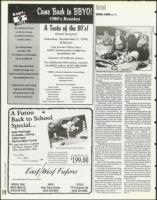
A Bosnian woman mourns over the remains of her son.
they are voicing that it is moral-
ly intolerable for America to pur-
sue her course of pragmatic
inaction.
In Washington, the options for
policymakers in the wreckage of
the former Yugoslavia are all po-
litically and diplomatically un-
palatable — just as the choices
all seemed unpalatable to Amer-
ican officials in the 1930s and
early 1940s, when decisive Amer-
ican leadership might have
slowed the Nazi killing machine.
Diplomats and politicians
point out that there is no good
way to protect Bosnian civilians
without a massive and open-end-
ed military commitment, an
enormously expensive and risky
proposition. Unilateral Ameri-
can action in an essentially Eu-
ropean problem, they say, would
complicate relations with our Eu-
ropean allies.
They also complain that atroc-
ity stories are difficult to verify.
All these arguments, planted
firmly in fact, but nourished by
fear and political self-interest,
echo the past excuses of Western
leaders faced with the persecu-
tion and eventual murder of Eu-
ropean Jewry.
Tragically, such horrors are re-
vealed only after they are over as
the secrets are unearthed from
the mass graves and the killing
centers. By then, the world's in-
dignation is essentially mean-
ingless — a final and particularly
grotesque act of violence against
the victims.
That is the motivation behind
the growing Jewish activism on
Bosnia this summer.
A number of mainstream Jew-
ish groups recently have made
strong calls for the unpopular op-
tion of force to end the killing in
the former Yugoslavia.
"It's not necessarily a position
that our members favor," an of-
ficial with one major group told
me last week. "We understand
the open-ended risks. But it's a
moral issue that we, as a Jewish
organization, can't duck."
The Holocaust museum is us-
ing its immense credibility to go
beyond memorializing Hitler's
victims. The center's role, its
leaders insist, will be incomplete
if it does not help the world stop
new instances of genocide before
the final body count is tallied.
Static museums that simply
display artifacts are non-contro-
versial; museums that seek to
use the lessons of the past to af-
fect the present cannot escape
the controversies of the day, they
argue.
Last week's event was care-
fully designed to avoid any taint
of taking sides in a feud where
passions run deep.
Some Jewish legislators also
are abandoning the illusory safe-
ty position that has dominated
Western policy since Yugoslavia
blew apart — that the situation
there is essentially insoluble and
not worth political or military
risk.
The legislators offer no magi-
cal answers, but increasingly un-
derstand that silence is
complicity, as it was a half-cen-
tury ago. They and others know
that Bosnia is not the Holocaust.
However, it is not a Jewish
neurosis to argue that the mem-
ory of the Holocaust can be
cheapened by applying the term
to every conflict that results in
the death of innocent civilians.
In the former Yugoslavia, the
historical reality that all sides
have been guilty of horrors in the
past century make direct com-
parisons with the millions of in-
nocent Jews who died in Hitler's
camps particularly odious.
But there is an unavoidable
similarity. The excuses for not
intervening could come back to
shame us, just as the civilized
world was shamed by its disas-
trous inattention to Jews during
World War II.
There are a million good rea-
sons to stay away from Bosnia.
But, as the Holocaust museum
teaches with such clarity, there
are no moral ones for refusing
to take chances to prevent geno-
cide. ❑
Scanned image of the page. Keyboard directions: use + to zoom in, - to zoom out, arrow keys to pan inside the viewer.
August 11, 1995 - Image 110
- Resource type:
- Text
- Publication:
- The Detroit Jewish News, 1995-08-11
Disclaimer: Computer generated plain text may have errors. Read more about this.