

li mpy r, W w
mamr!mgokkk ilip p r ga n
the age of 35 and certain ethnic groups. African Ameri-
cans, for example, have a 20 percent higher incidence rate
of twins than Caucasians.
Identical twins are a twist of fate.
The special features of the pregnancy do not end there.
For nearly all multiple pregnancies, the mother is treat-
ed as if she had a chronic disease like diabetes or lupus
that could jeopardize the pregnancy. From the moment
the twin pregnancy is discovered until the time the twins
are born, the pregnancy is considered high risk.
Pauline Zazula knows the routine. As a nurse practi-
tioner in Sinai Hospital's maternal fetal medicine divi-
sion of the obstetric and gynecology department, she
helped pioneer the program now in place.
Begun four years ago, the program supervises care for
multiple pregnancies and other high-risk situations. The
program's main purpose is to provide the best possible
survival chance to the mother and her children by head-
ing off the problems of a high-risk pregnancy.
"The program has been very successful," she said, not-
ing that more than 275 sets of twins have been born at
Sinai in the last five years.
Women carrying twins have a higher risk for such
things as gestational diabetes and toxemia, a blood dis-
order that can be fatal. Other characteristics of twin birth
include premature labor and a high-
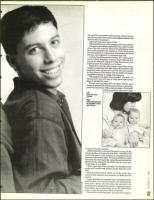
Left:
Craig and Jason
Charnas
Right:
Arlene Schreiber with
her daughters, Ellison
and Kimberly
CL
er rate of Cesarean. sections.
Shelly Rubenfire, a physical therapist at Sinai Hospi-
tal and mother of 2-year-old twin boys, remembers the
weeks she spent in the hospital on complete bed rest
because of premature labor. To keep herself from losing
her mind, she rearranged her recipe file and rewrote her
address book, hoping all the while that her twin boys
would make it to viability.
"There were days when I thought I would deliver at 26
weeks and I would think, 'Please, just let them live,' " she
said.
And when the twins do arrive, it's a busy event. Spe-
cial care and attention are necessary to make sure all
survive.
Arlene Schreiber, for example, had a birthing room-for
her first child. In it were her mother, her husband, her
nurse and a doctor. For the twins, she was put in an
operating room along with her doctor, a resident, an anes-
thesiologist, an anesthesiology nurse, Ms. Schreiber's
nurse, a nurse for each twin and her husband.
"It was like a three-ring circus. You can't even compare
Cr)
cC
LU
cc)
CD
1--
CD
CD
61