

tiny In The estl-Banic
ais Chabad Torah Center in
9d 0,1 o:
est Bloomfield supports Settlement Bat Ayin.'
W.
S
PHIL JACOBS EDITOR
'19Citi) 10 id
t3a
A+ 14
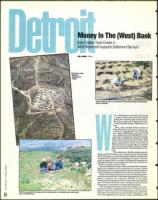
Bat Ayin is a small
settlement
situated south
of Efrat
Yeshiva students, part of a school led by Talmud scholar Rabbi Adin Steinsaltz,
work in a vineyard.
Children play against the background of the coastal plain, an area settlers won will be given
back to the Palestinians,
e've adopted towns and cities from Israel
to Japan. We've twinned on the bimah
during bar mitzvahs and confirmations.
We've even "graduated" high school class-
es with complete groups of Holocaust vic-
tims.
Now, Bais Chabad Torah Center of
West Bloomfield is hoping to inspire oth-
er Detroit congregations to do something
new: adopt a West Bank settlement. In its
case, Rabbi Elimelich Silberberg's syna-
gogue has "adopted" the settlement of Bat
Ayin, which is situated in the Judean Hills
in the Gush Etzion Block just south of
Efrat. Settled four years ago, it is located
half way between Rachel's Tomb in Beth-
lehem and the tomb of the Patriarchs in He-
bron.
The community, which numbers some 80
adults and 200 children, has a yeshiva that is led by Rabbi
Adin Steinsaltz, a world renowned talmudic scholar who
translated the Talmud into English. Bat Ayin's children
must be bussed daily to schools in Efrat and Jerusalem in
bulletproof busses, and women who need the services of a
mikvah must also travel to Efrat.
Because settlement living is often more secluded and some-
times more dangerous than suburban life in Israel, Rabbi
Silberberg said it was generally felt that residents could use
moral and financial support from American communities.
Rabbi Silberberg borrowed the idea of adopting settle-
ments from several New York-based congregations. His syn-
agogue contacted the American Friends of the Israel
Community Development Fund, which recommended Bat
Ayin. The rabbi said there were no political reasons behind
this project. It was strictly a humanitarian gesture.
"The Israeli government protects the settlers, but settle-
ments can still be a dangerous place to live. I think if we can
help in a small way, even if it's moral support, it's important.
We realize that people have many charities they give to, and
we're not suggesting that this be a major contribution. We