
THE JEWISH NEWS
JANUARY 18, 1991
iewoq
q
beliniino":";
)iertt isrt, •
EY11
A Toast
To Jewish Living
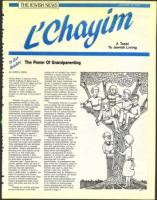
The Power Of Grandparenting
By CHERYL RISKIN
Cheryl Riskin is director of the
LeVine Institute on Aging and of
The Jewish Home for Aged and the
author of this month's To Our
Readers. For each issue of
L'Chayim, a rabbi, a Jewish
educator or other notable will
present an overview of the month's
theme.
Whether we grow up with
grandparents nearby or with only
their memory as related by others,
grandparents can have powerful
influence on our lives. Their
occupations, achievements, talents,
personalities, and disappointments
in life all hold something for later
generations. Grandparents have the
opportunity and task of transmitting
personal values and experiences of
their generations to grandchildren.
However that is accomplished, it
serves to expand a grandchild's
understanding of Jewish heritage,
tradition and aging in general.
The image of the role of a
grandparent has changed
dramatically in the last few decades.
As people live longer and healthier,
many grandparents have attributes
once associated with a younger
generation. Today's grandparent is
selecting from more options as far
as role he or she might play.
Grandparents continue in their
chosen careers beyond what had in
the past been considered
"retirement age." Some take on
second careers; others go back to
school. Still others put energies into
activities they are personally
interested in, whether it be on a
paid or gratis basis. In addition, the
death of a spouse and divorce
among older people does not mean
an end to intimate relationships.
Today's grandparents date, travel,
learn new skills, and plan for the
future.
Despite the mobility prevalent
among Americans, most older
people are not isolated from family
members. A study conducted five
years ago by the American
Association of Retired Persons
revealed that many individuals over
65 are in frequent contact with
offspring. Four out of five people in
this age group have living children,
and two-thirds of them live within 30
minutes of their children. Six out of
10 had weekly visits with children
and grandchildren, and three-fourths
talked with them on the phone each
week.
The families they are in contact
with no longer fall into traditional
categories. Family structure has
gone through major changes, so
much so that our culture has been
challenged to redefine "family."
Divorce, single parent and blended
families, and gay individuals
choosing parenthood have all
brought new dimensions to
grandparenting. Add to this the
issue of intermarriage between Jews
and non-Jews, and one will find that
the once clearly defined job
description for grandparent is now
undergoing a series of redrafts.
Grandparents, since they do not
in most situations assume daily
childrearing responsibilities, can be
selective in what the focus of their
time with grandchildren will be. A
grandparent may relate personal
views which can strengthen a
child's understanding of Jewish
tradition, or choose to pass along
segments of family history which
otherwise will not reach
grandchildren. A grandparent may
walk a fine line if religious, social or
political views differ from those of
children who want to instill their
values in their own children.
Grandparents have an obligation to
respect such boundaries yet remain
true to their own beliefs. In
situations where grandchildren live
long distances from grandparents,
or for children of intermarriage,
Jewish grandparents will have to
more specifically determine both
Continued on Page L-2
Scanned image of the page. Keyboard directions: use + to zoom in, - to zoom out, arrow keys to pan inside the viewer.
January 18, 1991 - Image 137
- Resource type:
- Text
- Publication:
- The Detroit Jewish News, 1991-01-18
Disclaimer: Computer generated plain text may have errors. Read more about this.