
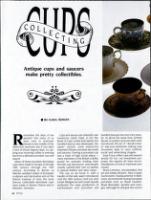

Antique cups and saucers
make pretty collectibles.
■ BY CAROL SORGEN
R
emember the days of tea
parties? Not many of us
have time to entertain
friends in the middle of the
afternoon anymore, but if you want
a hint of those bygone days, try sip-
ping your morning coffee or evening
tea from a delicate porcelain cup and
saucer.
Many of these porcelain demitasse
cups were made in Europe in the late
18th century through the 19th
century. According to Bonita La
Marche, assistant curator of European
sculpture and decorative arts at the
Detroit Institute of Arts, the most
famous collectable demitasse cups
were made in Sevres, France and in
Meissen, Germany.
42 STYLE
Cups and saucers are relatively new handled teacups become truly popu-
inventions. Garth Clark, in his The lar. At about the same time, printed
Book of Cups, writes that before the decals on pottery and porcelain were
handled teacup was developed, the introduced; the art of "decalcoman-
upper classes used expensive ia" was soon perfected, making cups
imported Chinese porcelain tea bowls innovative ways to carry political,
and saucers. Owning a porcelain cup social and advertising slogans.
Even if you collect cups and saucers
was a mark of high social status —
many members of the British nobility strictly for fun, not investment pur-
posed for portraits holding their poses, the experts do have recom-
favorite cup and saucer, and people mendations on how to maximize your
usually carried their own to parties money.
Bruce Levinson, vice president, fine
in special leather and satin cases.
The cup as we know it, with a art and estate division, Alex Cooper
handle on the side, wasn't introduced Auctioneers, headquartered in Balti-
until the 18th century. And not until more, recommends buying European
Josiah Wedgwood and Josiah Spode porcelain such as Royal Doulton,
perfected the mass production of Royal Worcester, Aynsley and Limo-
earthenware and porcelain did ges, although he did give the nod to